
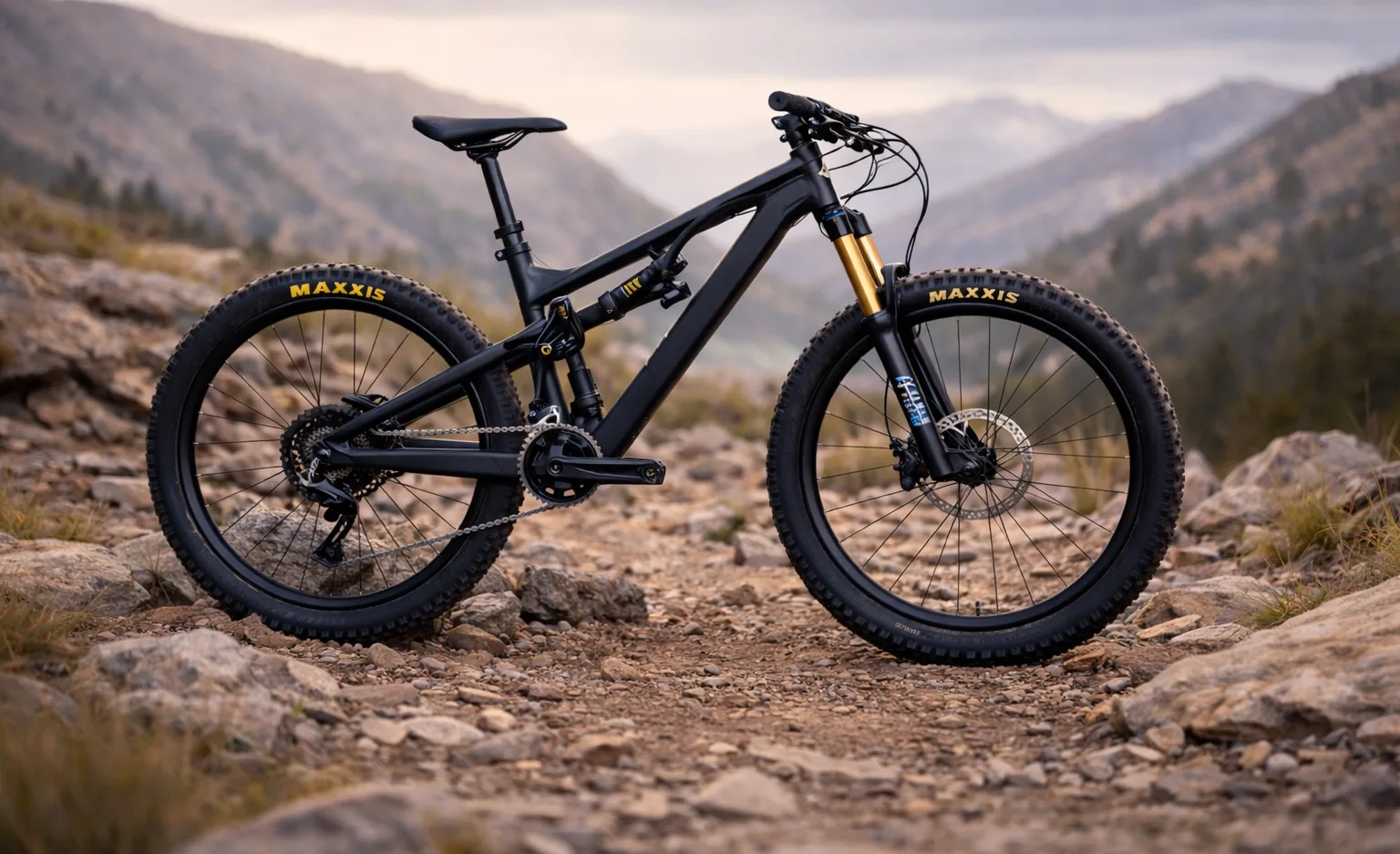
To dial in the Ideal Downhill MTB Setup for Cusco, the goal is simple: more control, more comfort on long descents, and fewer rookie mistakes like losing traction, burning out too fast, or braking poorly. In this guide, we break down what bike makes the most sense for travel, how to adjust suspension, tires, brakes, and cockpit, and what to check before your first run.
Want to tackle one of the most technical trails in the Sacred Valley? Discover our day tours in Cusco designed for riders seeking real enduro in the Andes.
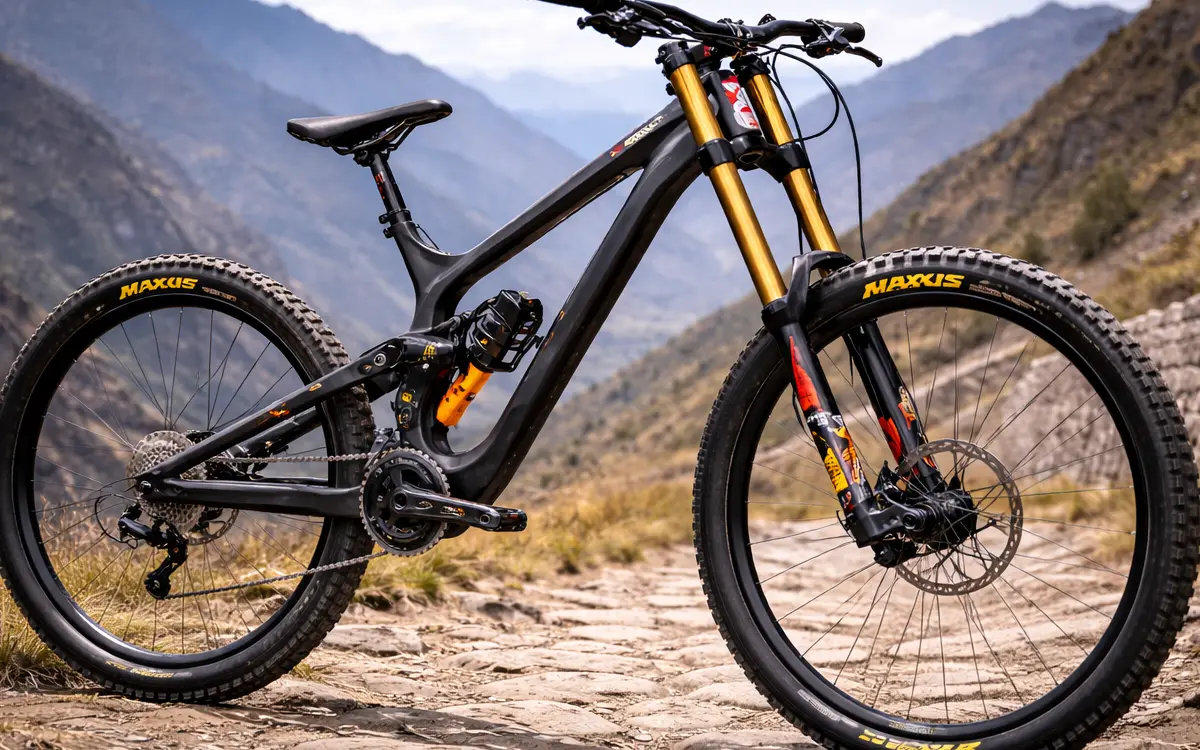
Why the Ideal Downhill MTB Setup matters when you travel
When you are traveling, everything feels different: you ride trails you do not know, the surface changes constantly, the weather shifts fast, and you are often on a rental bike or a setup that is not your usual. That is why an Ideal Downhill MTB Setup in Cusco matters. It helps you ride safer, adapt faster, and avoid preventable mistakes.
Travel factors also make the bike feel “off,” even when the trail is not extremely technical. The wrong setup can lead to less traction, slower reactions, and quicker mental fatigue.
📊
Key Setup Facts
What type of bike works best for downhill in Cusco
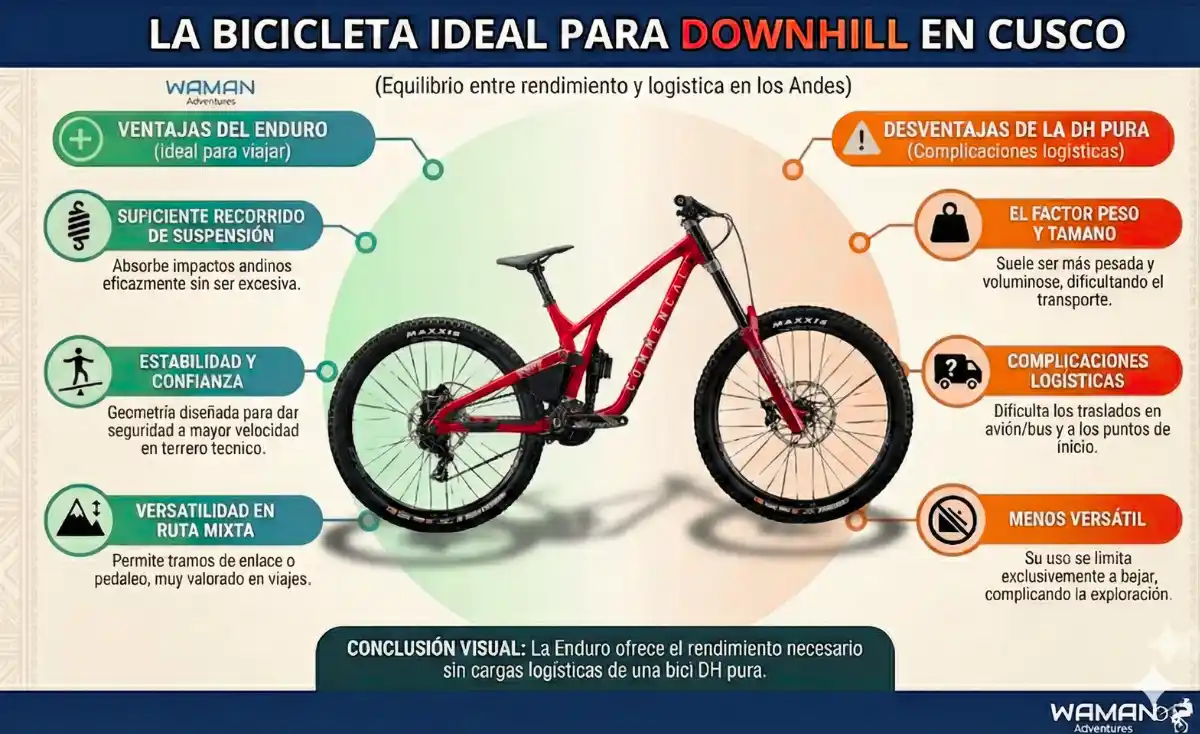
For most travelers, the Ideal Downhill MTB Setup in Cusco starts with a well tuned enduro bike.
It hits the sweet spot for travel: enough suspension travel to smooth out hits, stability at speed, and a geometry that feels confidence building, without the logistics headache of a full downhill bike.
A dedicated downhill bike can be heavier, bigger, and less versatile, which can complicate flights, transfers, and mixed terrain days.
Suspension tuning: the foundation of an Ideal Downhill MTB Setup
Suspension is the base of your setup in Cusco, especially if you are traveling and do not know the trail yet.
Tires and pressure: a big part of the Ideal Downhill MTB Setup
When you ride downhill in a new destination, running the same tire pressure you use at home often works against you. In Cusco, conditions shift fast: fine dust, loose rock, gravel, and eroded sections can reduce traction and make corners feel unpredictable.
Remember this
The idea is simple: the right tire pressure means more contact with the ground, which means more traction and confidence on longer descents.
Brakes: control and safety on long descents
On longer descents, what really matters is consistent braking that is easy to modulate. Real control, not just raw power.
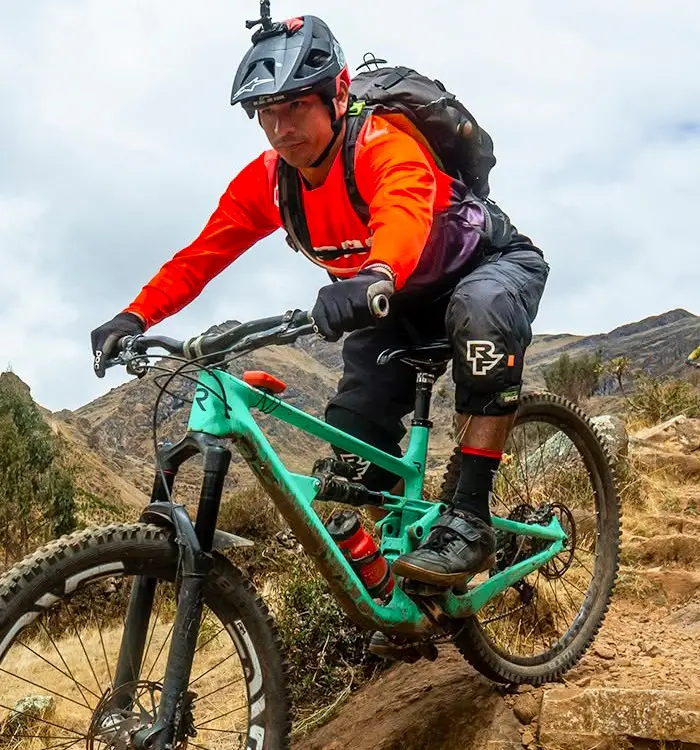
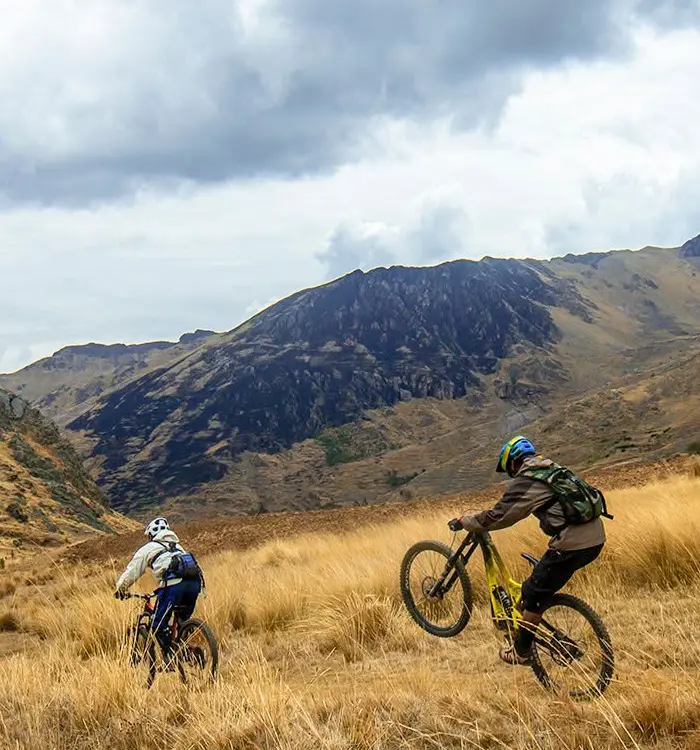
Comfort and cockpit: the details that complete your setup
An uncomfortable position does not just ruin the fun. It directly affects control and reaction time.
Expert tip
A slightly more conservative setup gives you more control when you are riding trails you do not know.
Common mistakes when building an Ideal Downhill MTB Setup
Many popular setups are tuned for compact, repeated, predictable bike park lines, where traction stays consistent. On open natural terrain like Cusco, with fine dust, loose rock, and eroded sections, copying that exact setup can cost you grip and make the bike feel twitchy.
Another classic mistake is running tire pressure too high “for safety.” Yes, it can reduce pinch flats, but it also shrinks your contact patch: the bike bounces more, brakes worse, and skids show up faster, especially in corners and long braking zones.
1
Copying a bike park setup on natural trails
Why it fails Bike parks are compact and predictable. Natural trails come with dust, loose rock, and constant erosion.
✓ Fix Run suspension about 10 to 15 percent softer, drop tire pressure about 2 to 4 PSI from your usual, and keep the first 10 minutes conservative.
2
Running tire pressure too high “for safety”
Why it fails You reduce your contact patch, increase surprise bounces, and lose side grip in corners.
✓ Fix Drop 2 to 4 PSI from your usual. Pay attention in the first few corners and adjust from there.
3
Dragging brakes the entire descent
Why it fails Pads and rotors overheat, power fades, and forearm fatigue builds fast.
✓ Fix Use pulse braking: brake firmly before corners, release on straights. Rotate fingers every 3 to 4 minutes to spread the load.
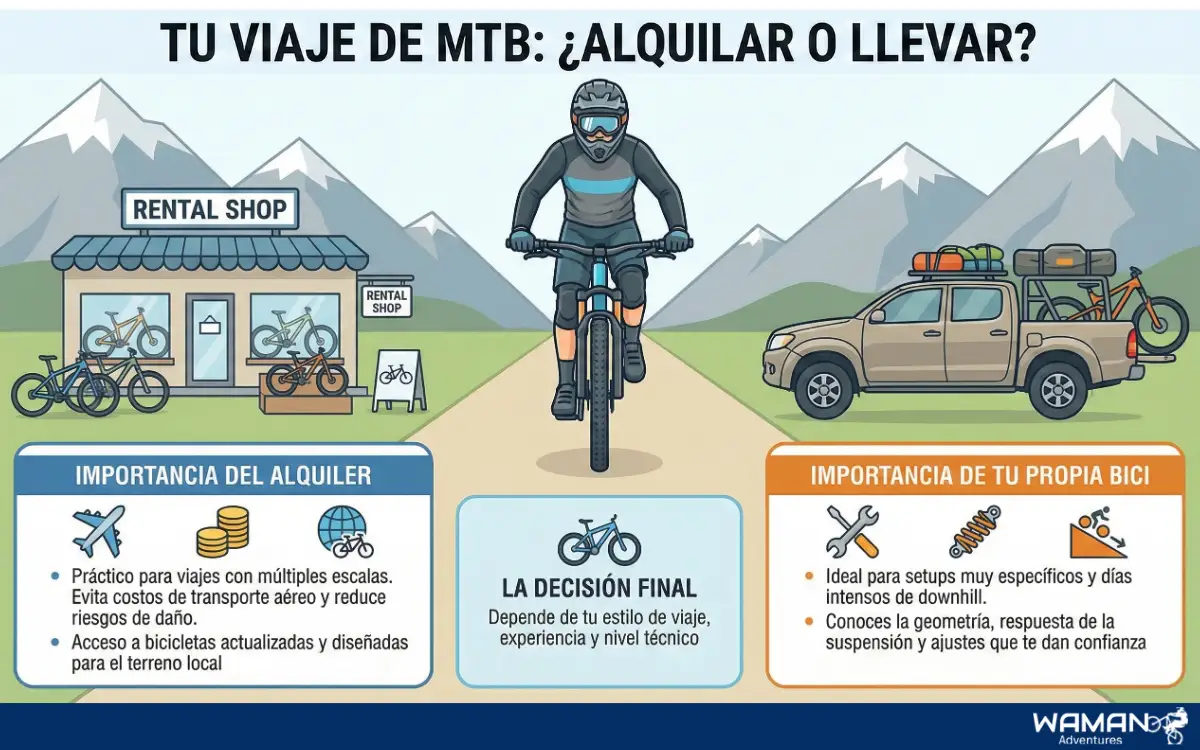
Rent a bike or bring your own for the Ideal Downhill MTB Setup
Choosing between renting and bringing your bike depends on logistics and how specific your setup is. Renting simplifies travel. Your own bike brings familiarity and confidence.
If you are not sure what bike to choose, how to build your Ideal Downhill MTB Setup, or what to double check before you ride, Peru Biking Tours can help you dial it in for more control and confidence. Let us help you plan your ride with local guiding, safety recommendations, and complete logistics.
Thousands of travelers have trusted Peru Biking Tours to enjoy unforgettable experiences in the Andes.
Your safety comes first
Routes adapted to your level, expert local guides, and full support at every stage.
No need to worry about a thing
We take care of all the logistics so you can focus entirely on enjoying the scenery.
Authentic routes in Cusco
Experience the Sacred Valley in a real way, at your own pace, with access to the best trails.
High quality gear
High end enduro bikes, helmets, and protective gear for every level.
Plan your MTB experience in Cusco
MTB Day Tours in Cusco
If you want to explore MTB routes with the right logistics, local support, and suitable trail selection, check out our MTB Day Tours in Cusco.
E-bikes Tours
Curious how altitude impacts your e-bike in Cusco? Our E-Bike tours are designed for riders who want authentic enduro adventures in the Andes.
FAQs about the Ideal Downhill MTB Setup
What is the Ideal Downhill MTB Setup in Cusco if I rent a bike locally?
To get an Ideal Downhill MTB Setup in Cusco on a rental, prioritize brakes that feel strong and consistent, suspension that moves smoothly, and tires that suit local conditions like dust, gravel, and loose rock. Check lever feel, pad wear, and make sure the suspension is not overly firm or sinking too deep. Brand matters less than a proper fit to your height and weight and a stable feel in the first minutes of your descent.
Do I need a dedicated downhill bike for Cusco?
Not always. For most travelers, the Ideal Downhill MTB Setup in Cusco is a well tuned enduro bike because it delivers control and comfort on longer descents without complicating travel logistics. A pure downhill bike can be great for nonstop technical runs, but it is often less practical for transport and mixed route days. Choose based on the trails you will actually ride, not just the biggest bike possible.
How do I get an Ideal Downhill MTB Setup for trails I do not know?
Start conservative: run suspension a bit softer, drop tire pressure slightly, and keep your pace controlled at the beginning. Do a first “scout” descent to understand traction, corners, and surface changes, which are common in Cusco. Then fine tune from feel, without making extreme changes all at once.
Do altitude and heat affect the Ideal Downhill MTB Setup in Cusco?
Yes. Altitude increases fatigue and can affect focus and reactions. Heat can also stress brakes and tires. To protect your Ideal Downhill MTB Setup in Cusco, avoid constant light braking on long descents because pads and rotors can overheat and performance can fade. Pulse braking and smart pacing improve control and reduce fatigue.
Is tubeless required for an Ideal Downhill MTB Setup in Cusco?
It is not required, but it is highly recommended. Tubeless reduces flats and lets you run slightly lower pressure for better traction on dust, gravel, and loose rock. On longer or more remote routes around Cusco, it also gives extra peace of mind when conditions change.
What are the most common mistakes when dialing an Ideal Downhill MTB Setup in Cusco?
The most common mistakes are copying bike park setups without accounting for natural terrain, running tire pressure too high “for safety,” and ignoring how long the descents really are. It is also common to set brake levers at an awkward angle, which causes faster hand and forearm fatigue and reduces braking precision.
Should I follow a local guide’s advice for the Ideal Downhill MTB Setup in Cusco?
Yes, especially if it is your first time in Cusco. A local guide knows where traction changes, which sections get loose, and how the season affects the trail. That makes it easier to refine your Ideal Downhill MTB Setup in Cusco with practical advice on tire pressure, suspension feel, and pacing based on real conditions that day.
What should I check before a full day to keep an Ideal Downhill MTB Setup in Cusco?
Before you ride, check brakes (pads, lever feel, and power), tire pressure, basic bolt tightness on wheels and bar, and that suspension is smooth with no strange noises. Also make sure brake levers sit at a comfortable angle for your wrists. This quick check is a key part of an Ideal Downhill MTB Setup in Cusco because it reduces errors and improves control from the first descent.