
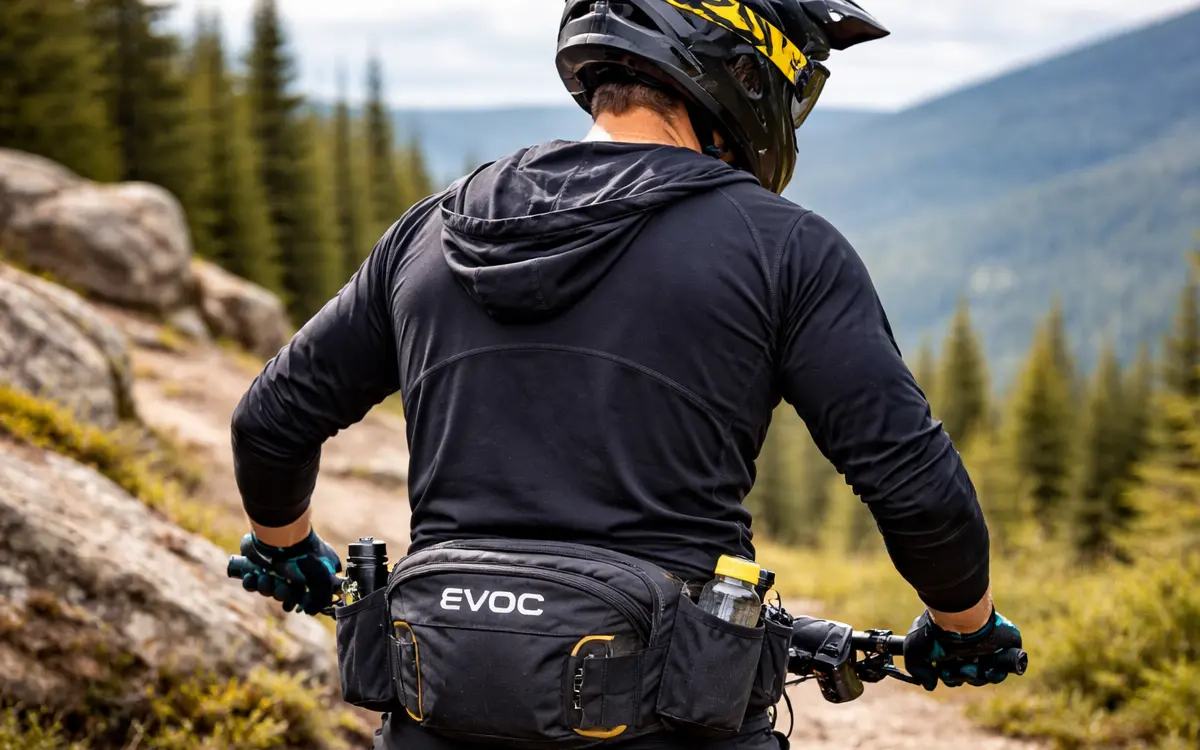
On trail rides, a Hip Pack for Enduro MTB has become an increasingly popular option for riders who want more freedom of movement, better back ventilation, and quick access to tools, snacks, or hydration. In this blog, we explain why the hip pack for enduro MTB has earned its place among the favorite accessories for many cyclists.
Lightweight, practical, and secure: discover how to choose the ideal hip pack for your mountain enduro rides. Explore our Day Tours in Cusco designed for riders looking for real enduro in the Andes.
What is a hip pack for enduro MTB
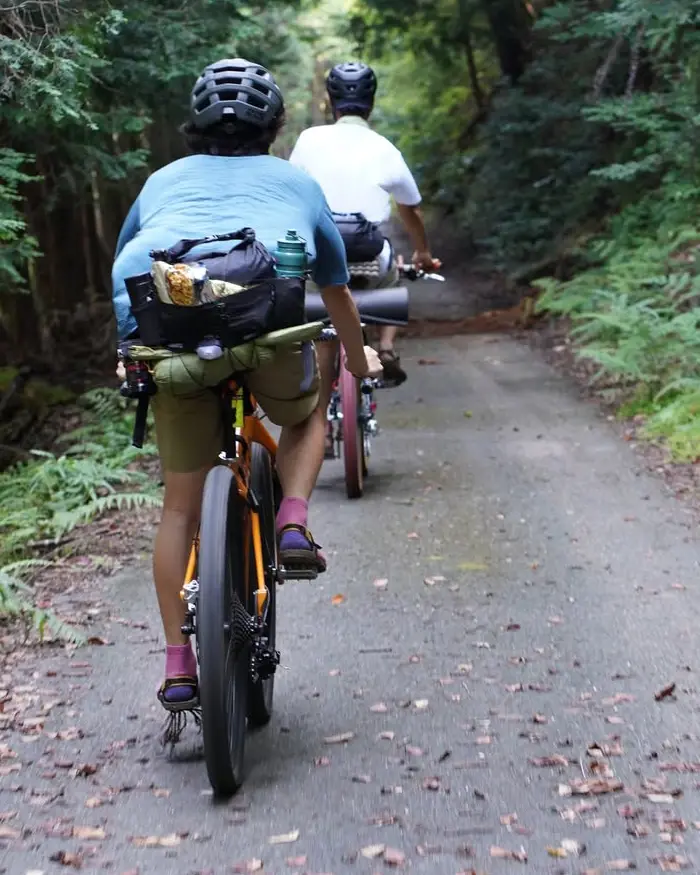
This type of accessory has become very popular in disciplines like enduro, trail, and all mountain, where you typically ride technical trails without needing to carry a large backpack.
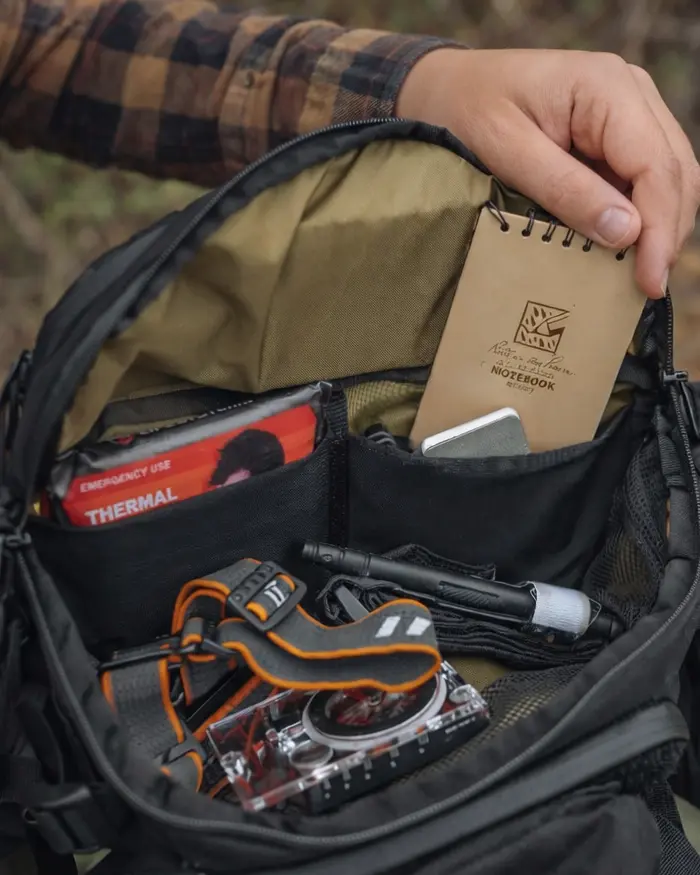
Many modern models are designed specifically for mountain biking and include organized compartments for tools, pockets for snacks, space for a water bottle or small hydration systems, and adjustable straps that keep the bag stable even on rough terrain.
Another major advantage of a hip pack for mountain enduro is ventilation. Since you are not carrying weight on your back, airflow improves and heat buildup is reduced, which is especially useful on long rides or in warm climates.
Why use a hip pack for enduro mountain biking
Many riders prefer using a hip pack for enduro mountain biking because it offers a strong balance of comfort, mobility, and ventilation during the ride. Without weight on your shoulders or back, you can move more freely on the bike.
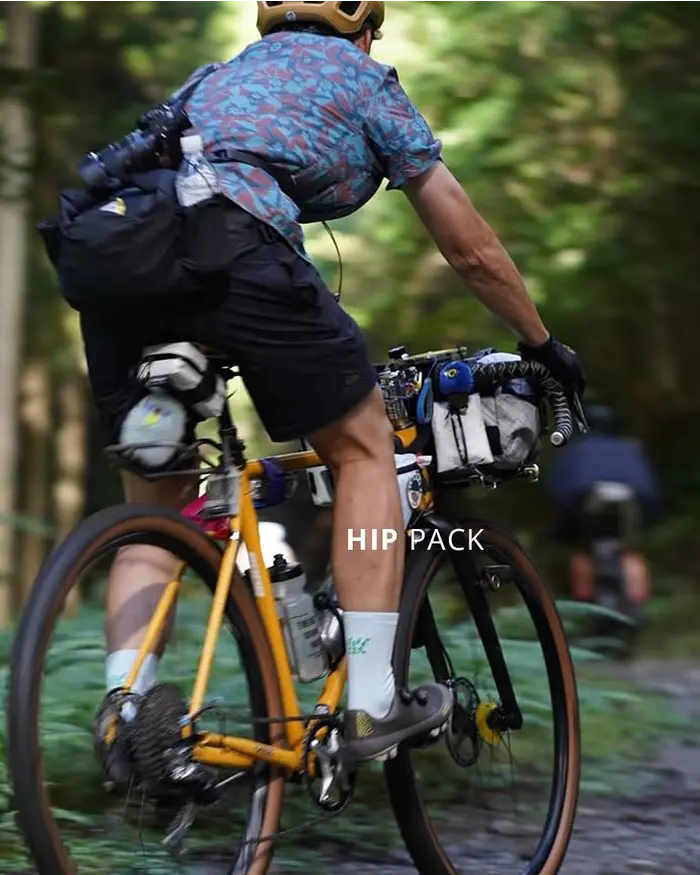
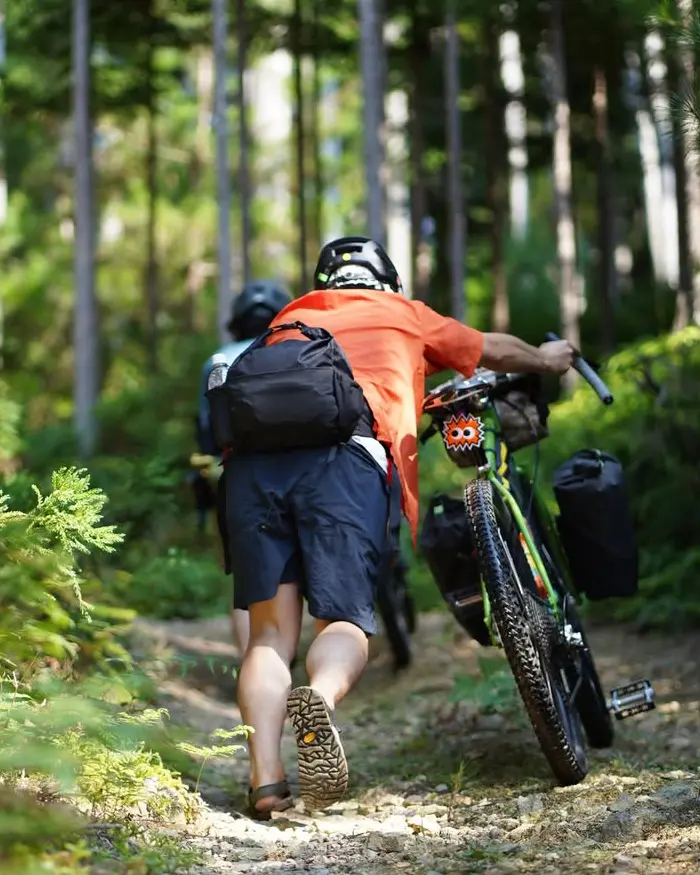
In addition, a hip pack usually gives you quick access to your gear. Most models include organized compartments where you can store tools, snacks, or your phone, making it easier to grab or store items without removing a backpack.
Did you know?
A well organized hip pack lets you access your tools without stopping for long.
When to use a hip pack for enduro mountain biking
A hip pack for enduro mountain biking works especially well on short or half day rides, when you only need to carry the essentials.
It is also very useful in warm climates or on routes with sustained pedaling, since it keeps your back free and allows better ventilation. This helps reduce heat and sweat buildup, which is common when wearing a traditional backpack for several hours.
Hip packs are widely used on trail and enduro rides, where body mobility is key to controlling the bike on technical terrain.

What to carry in a hip pack for enduro mountain biking
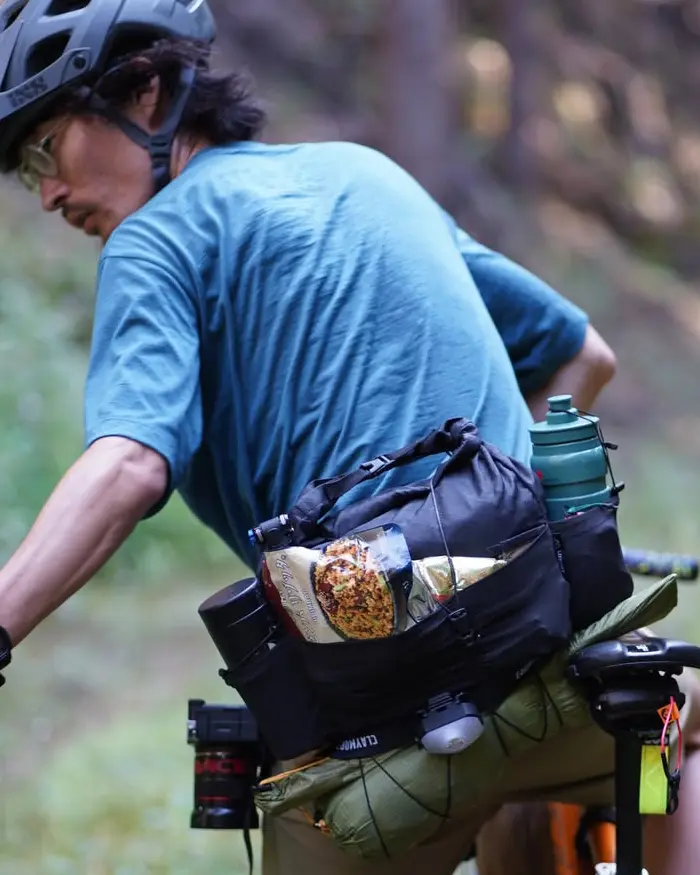
Riders usually carry essential gear that allows them to fix small mechanical issues, stay hydrated, and have what they need during the ride.
- Water bottle or small hydration system
- Bike multi tool
- Spare tube
- Tubeless repair kit or patches
- Portable air pump or CO₂ cartridge
- Tire levers
- Snacks or energy bars
- Mobile phone
- ID document
- Cash or card
- Small basic first aid kit
- Buff or bandana for dust or sun
Key features of a good hip pack for enduro mountain biking
Wide and stable belt
The belt secures the hip pack around your waist. In enduro specific models, it is usually wider and padded to distribute weight more evenly.
Organized compartments
These are the different pockets and sections that allow you to keep your gear organized during the ride.
Breathable and durable materials
These are the fabrics used to build the hip pack. In mountain biking, they are typically durable materials combined with ventilation panels.
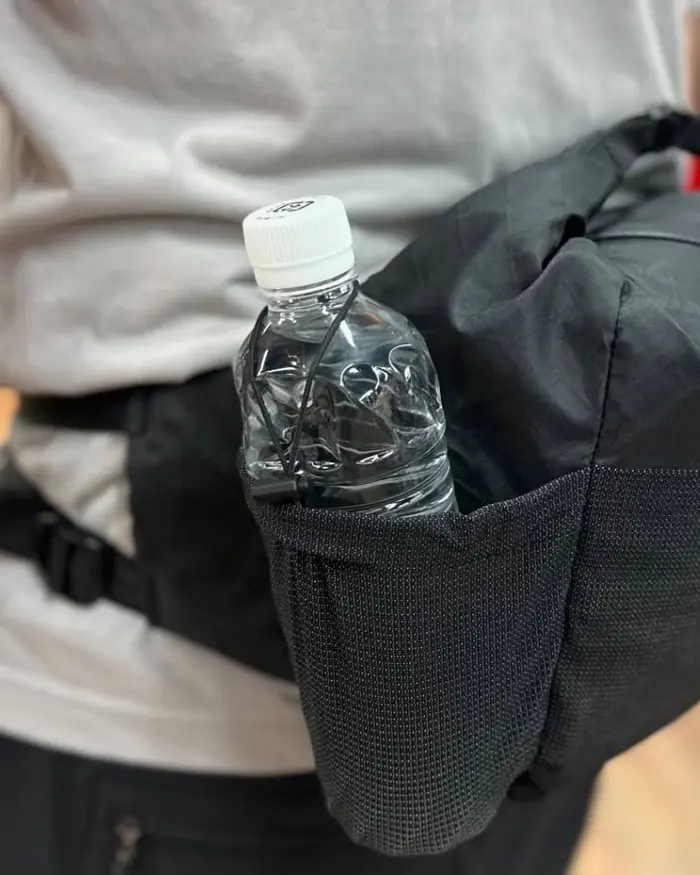
Hydration system or bottle holder
Some hip packs include space for a water bottle or a small integrated hydration system.
Proper capacity
Capacity refers to the storage volume of the hip pack, usually measured in liters.
Hip pack vs backpack
Important note:
An overloaded hip pack loses its main advantage: comfort.
How it improves mobility on technical trails
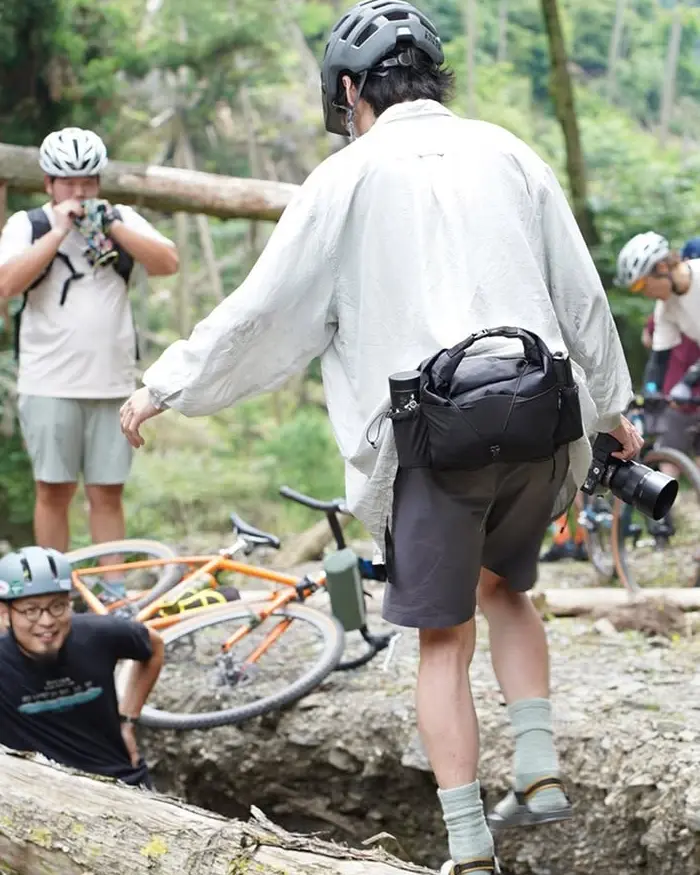
Using a hip pack for mountain enduro can improve your mobility on technical trails because the weight is concentrated around your hips, close to your center of gravity.
Another advantage is that it reduces the feeling of weight on your back, allowing you to maintain a more relaxed posture during descents.
The hip pack for mountain enduro is a practical solution for riders who want more freedom, better ventilation, and only the essentials on technical routes or half day rides. Choosing the right model based on your riding style and route type can make a real difference in how you experience the terrain. Want to keep improving your ride and choose the right gear for every outing? At Peru Biking Tours, we help you get fully prepared to ride with confidence.
Thousands of travelers have trusted Peru Biking Tours to enjoy unforgettable experiences in the Andes.
Your safety comes first
Routes adapted to your level, expert local guides, and full support at every stage.
No need to worry about a thing
We take care of all the logistics so you can focus entirely on enjoying the scenery.
Authentic routes in Cusco
Experience the Sacred Valley in a real way, at your own pace, with access to the best trails.
High quality gear
High end enduro bikes, helmets, and protective gear for every level.
Plan your MTB experience in Cusco
MTB Day Tours in Cusco
If you want to explore MTB routes with the right logistics, local support, and suitable trail selection, check out our MTB Day Tours in Cusco.
E-bikes Tours
Curious how altitude impacts your e-bike in Cusco? Our E-Bike tours are designed for riders who want authentic enduro adventures in the Andes.
Frequently asked questions for Hip Pack for Mountain Enduro
What is a hip pack for enduro mountain biking?
It is a compact waist pack used to carry tools, water, and essential items during a ride without needing a backpack. It is very popular in enduro because it allows more freedom of movement on technical trails.
What is a hip pack used for in enduro mountain biking?
It is used to carry essential gear such as tools, snacks, hydration, and personal items. By keeping your back free, it also improves ventilation and comfort on demanding descents.
Is a hip pack better than a backpack?
It depends on the type of ride. For short or technical routes, many riders prefer a hip pack for its comfort and mobility. For longer rides or when carrying more gear, a backpack may be more practical.
How much water can a hip pack carry?
Most models allow you to carry a water bottle or a small hydration system, depending on the design and capacity.
Do hip packs move while riding?
Models designed for mountain biking include wide belts and secure adjustment systems that keep them stable. If properly fitted and not overloaded, they should move very little.
What size hip pack should I choose?
Most enduro riders use hip packs between 1 and 3 liters, enough for tools, hydration, and basic accessories. The best choice depends on how much gear you plan to carry.
Is a hip pack comfortable for long rides?
It can be comfortable for half day rides, especially if you carry only the essentials. For very long rides, some riders prefer a backpack with more capacity.
Can beginners use a hip pack?
Yes. It is a practical option for carrying essentials without a large backpack. For beginners, it is a simple and comfortable way to organize tools, water, and personal items.