
Long descents to the Sacred Valley offer a distinct kind of mountain biking in Cusco because they combine Andean scenery, extended vertical drop, natural terrain, and a very special connection to the landscape. In this blog, you will get a clearer sense of what these descents are really like, what skill level you need, and how to prepare before you ride. Here, you will find the most important things to know.
Want to ride one of the most technical trails in the Sacred Valley? Explore our Day Tours in Cusco designed for riders looking for real enduro in the Andes.
What are long descents into the Sacred Valley really like?
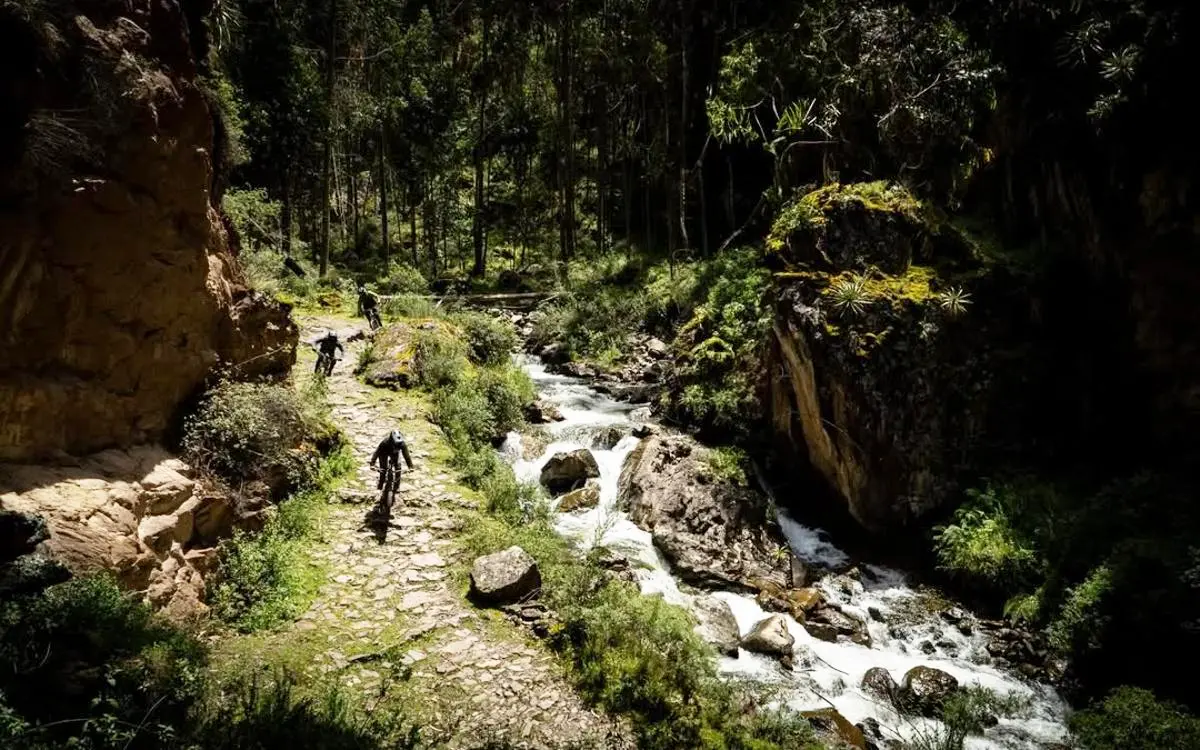
You can start in a higher, colder, more open area and finish in a warmer setting with different vegetation and a completely different view of the valley. It is also common for a single route to combine sections of loose dirt, rock gardens, tight turns, narrow singletrack, and even old stone sections.
As you descend, you are not only focused on the trail. You also ride through Andean mountains, farmland, ancient Inca paths, and rural areas that give the route a strong sense of identity.
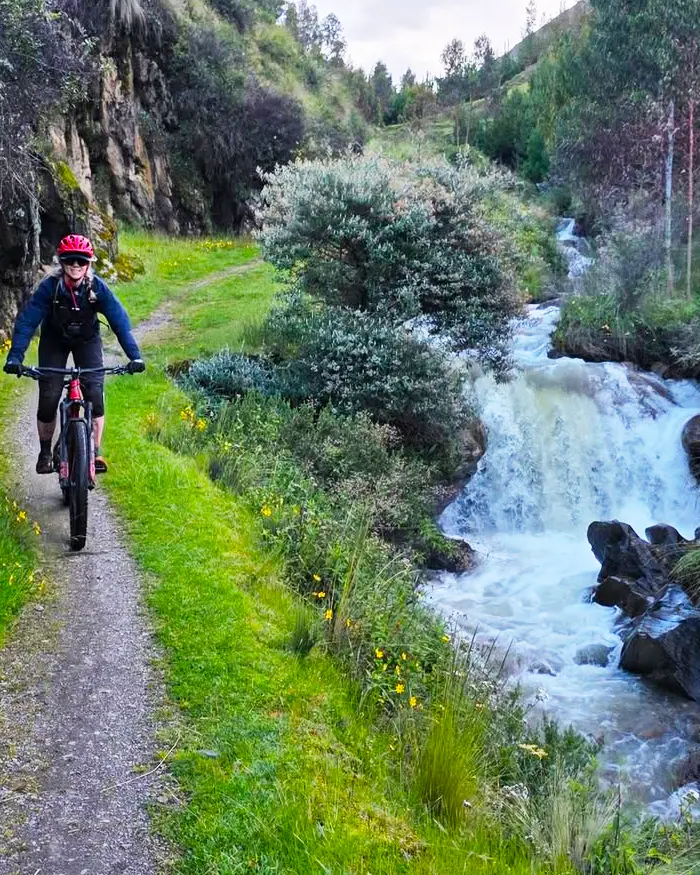
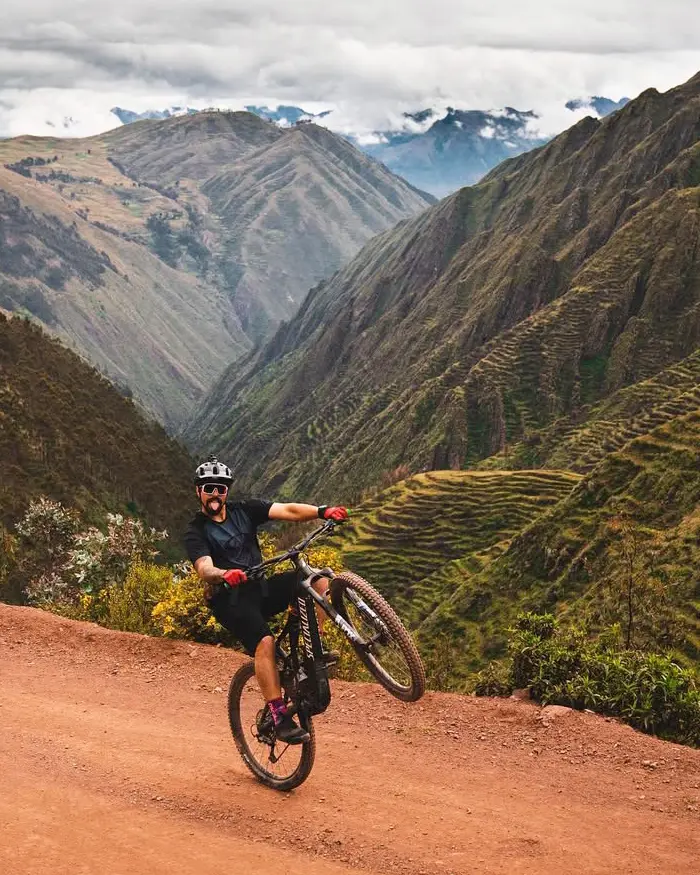
Why do these descents feel different from a typical ride down?
What really changes the feel of the route is the combination of several factors at once: altitude, the length of the descent, natural terrain, and the need to stay focused for much longer.
Routes like Lamay or Lares, for example, combine more than 3,937 feet (1,200 meters) of vertical descent with technical sections such as rocks, tight turns, stone steps, and more flowing stretches, which makes them much more complete than a simple recreational descent.
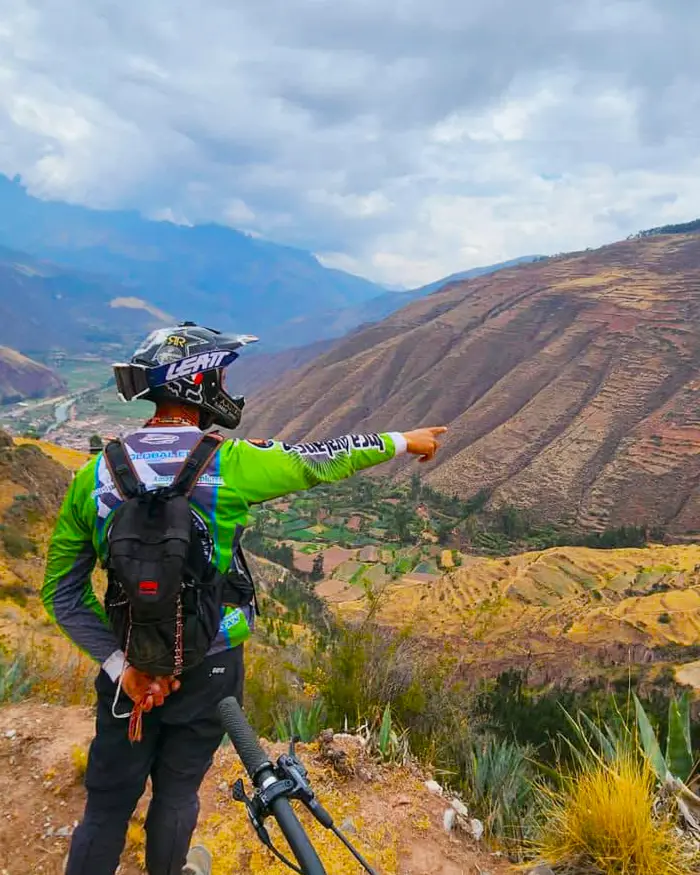
In Maras, the descents cross areas with terraces and wide open views of the Sacred Valley. That blend of sport, scenery, and cultural context makes the experience feel like far more than a simple downhill ride. It feels like a journey with much more character.
Important note:
The setting is natural, with no constant signage or bike park style maintenance.
What kind of terrain can you expect on the descent?
What level of experience do you really need?
If you have a beginner level, you will probably enjoy smoother, wider routes with fewer technical sections more. In that case, a long descent may feel more tiring than expected, especially if you still brake too much.
If you already have an intermediate level, you are much more likely to enjoy this kind of ride. As an intermediate rider, you usually have better braking control, can hold your position more effectively on descents, and adapt more confidently to mixed terrain.
If you have an advanced level, these descents usually feel much more fluid and enjoyable. With more experience, you not only control the bike better, but also read the terrain more effectively, manage your energy better, and stay calm even when more technical or demanding sections appear.
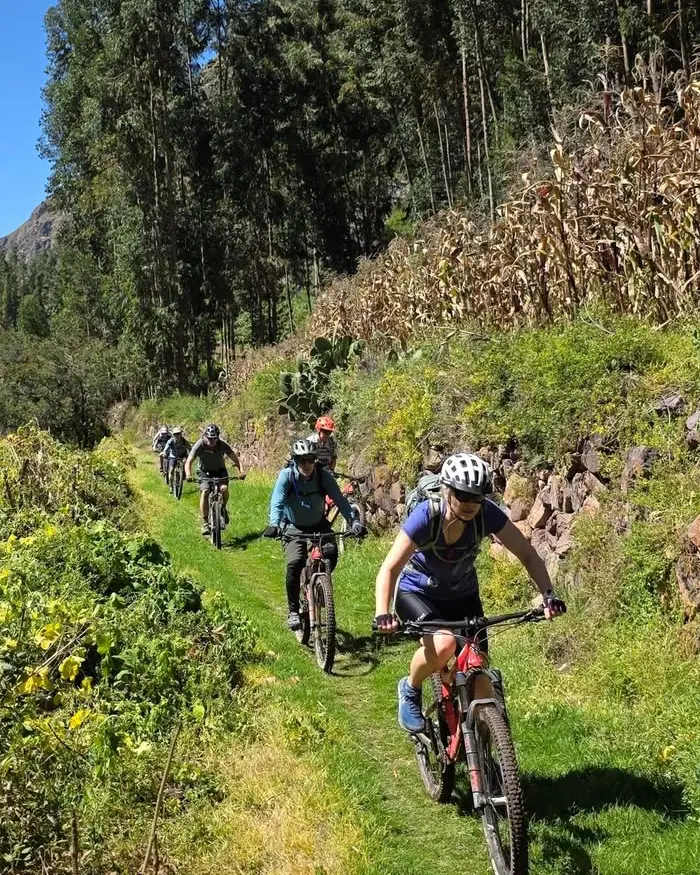
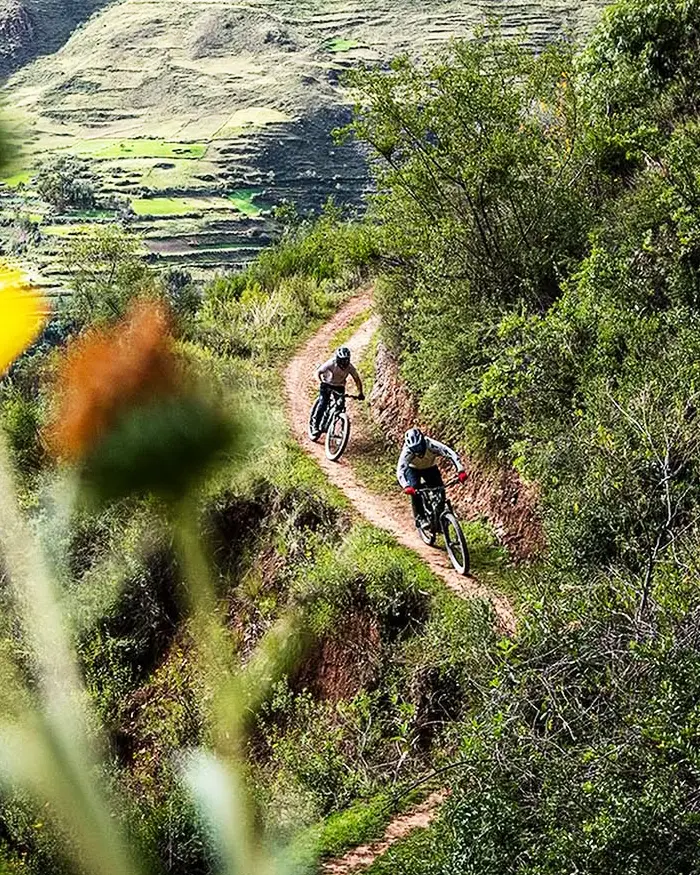
How altitude affects you even on a route that is mostly downhill
In the Sacred Valley and its access routes, what matters is not only the descending profile, but also the starting point, the dry mountain air, and the sun exposure.
You also need to remember that altitude does not act alone. On this kind of descent, it combines with stronger solar radiation, a drier environment, and temperature changes between the upper sections and the valley floor.
In practical terms, it comes down to something very simple: even if the route is mostly downhill, you should not underestimate it. You may feel tighter hands, heavier breathing, lower tolerance for effort, and greater mental fatigue if you are not acclimated or if you start with too little water.
Keep in mind:
Altitude affects both your breathing and your reaction time.
Best season for long descents into the Sacred Valley
| Season / months | What the weather is usually like | What the terrain is usually like |
| Dry season (April to October) | More stable days, less rain, and better visibility. | This is the best time for long descents into the Sacred Valley, with more control, better views, and a smoother overall experience. |
| May to September | Clearer skies and more consistent weather. | This is usually the most recommended period for riders looking for the best descending conditions. |
| Rainy season (November to March) | More cloud cover, more frequent rain, and more variable weather. | The route can feel more technical and demand greater caution, especially in corners or rocky sections. |
| Transition months (April, October, and part of November) | Relatively favorable weather, but more changeable. | A good option if you want fewer visitors, but it is smart to check the forecast carefully before heading out. |
Popular areas for long descents into the Sacred Valley
Among the best known areas for long descents into the Sacred Valley are Lamay, Maras, and some sectors near Urubamba, and each offers a different kind of experience within the valley.
Lamay
It is associated with longer, more technical, and more demanding descents. It is a very well known zone among riders looking for a more serious mountain biking experience, with sections where bike control, terrain reading, and speed management matter a lot.
Maras
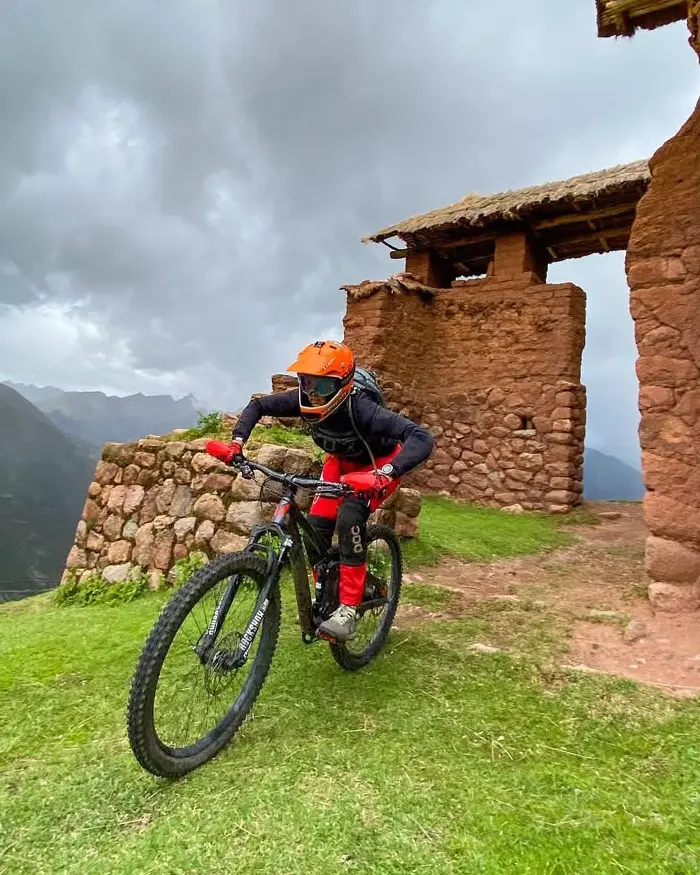
It stands out for its open landscapes, high Andean setting, and routes that blend history with natural terrain in a very appealing way. It is an area that draws a lot of attention because it lets you ride through wide valley views, high altitude paths, and sections with stone, turns, and changing surfaces.
What clothing and gear should you bring for a long descent?
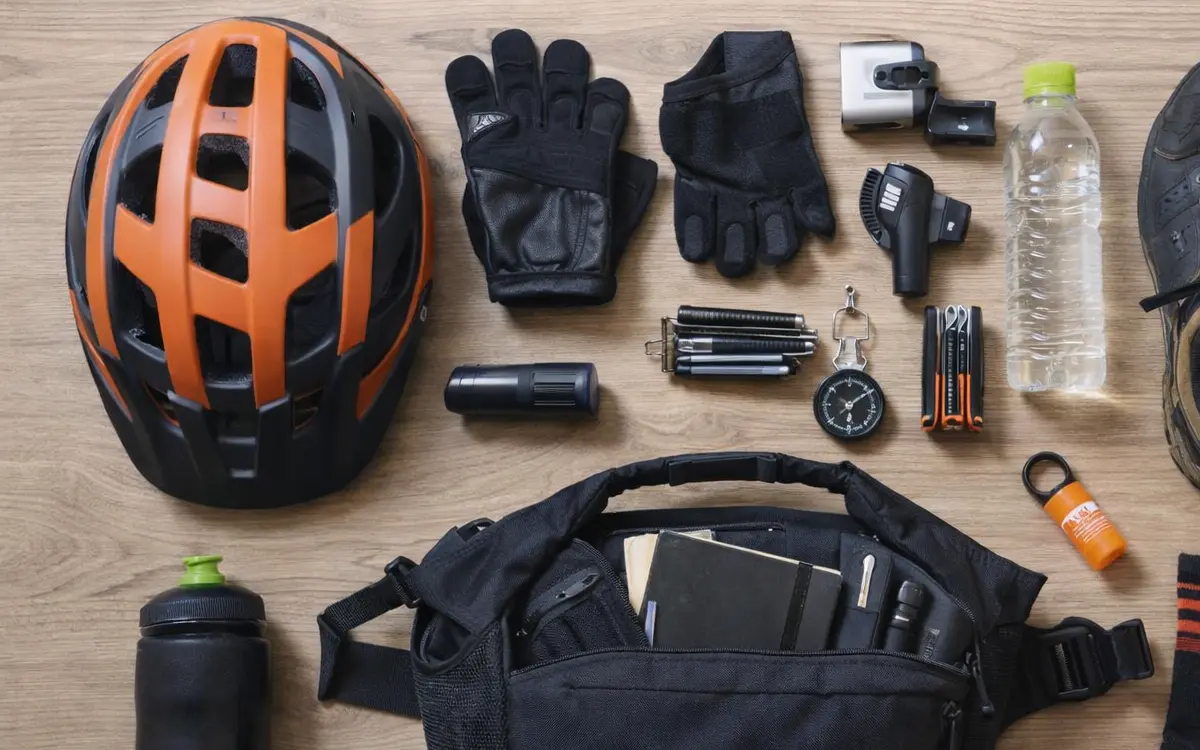
| Gear | Why bring it? |
| Helmet | It is the single most important piece of safety equipment. On a long descent with rocks, turns, gravel, and uneven ground, protecting your head is essential. |
| Cycling gloves | They improve your grip on the handlebars, reduce some of the vibration from the trail, and protect your hands in case of a fall or sudden maneuver. |
| Protective glasses or sunglasses | They protect you from dust, wind, and solar radiation, which is especially important on high altitude routes like those in the Sacred Valley. |
| Breathable shirt or jersey | It helps wick away sweat and keeps your body drier during the ride. |
| Comfortable cycling shorts or pants | Comfortable clothing lets you move better and spend more time on the bike without unnecessary discomfort. |
| Light jacket or windbreaker | It is very useful in high areas or during descents, where the wind feels stronger and the weather can change quickly. |
| Water | Hydration is essential, especially because of the altitude, dry air, and sun exposure during the ride. |
| Snacks | They help you keep your energy up and prevent fatigue from setting in too early. |
| Basic repair kit | Ideally, you should carry at least a spare tube, pump or inflator, tire levers, and a multi tool to solve simple issues on the trail. |
| Sunscreen | Even if the temperature feels pleasant, the sun at altitude can be stronger, so protecting your skin is also part of your basic setup. |
| Phone with battery | It can be very useful for communication, navigation, or any unexpected situation during the ride. |
| Personal ID or some cash | It is always smart to carry identification and a little money for safety or any need that comes up during the route. |
Why can a guided ride make the experience much easier?
At first glance, a long descent can look simple because much of the route goes downhill. In practice, though, there are many factors that shape the experience: the starting point, altitude, terrain type, transport logistics, and the real difficulty level of each route.
Many of these routes do not begin where they end, so you need to solve transportation to the high starting point, coordinate timing, and know exactly where the descent begins. A company with private transportation and clearly organized tours can make a major difference.
What you will see along the way
The Sacred Valley has been an important agricultural region since Inca times, precisely because of its warmer climate and fertile soil. That means that as you ride, you are not only following a mountain bike route, but also moving through a landscape that has been inhabited and worked for centuries.
In some areas near Maras or Lamay, you can also see Inca agricultural terraces and old stone roads, which adds a historical dimension to the ride.
Thousands of travelers have trusted Peru Biking Tours to enjoy unforgettable experiences in the Andes.
Your safety comes first
Routes adapted to your level, expert local guides, and full support at every stage.
No need to worry about a thing
We take care of all the logistics so you can focus entirely on enjoying the scenery.
Authentic routes in Cusco
Experience the Sacred Valley in a real way, at your own pace, with access to the best trails.
High quality gear
High end enduro bikes, helmets, and protective gear for every level.
Plan your MTB experience in Cusco
MTB Day Tours in Cusco
If you want to ride routes like Lamay Sapacto with the right logistics, local support, and the right trail selection, take a look at our MTB Day Tours in Cusco.
Multi Day MTB Tours
For more complete experiences that connect multiple valleys and high mountain routes, discover our Multi Day MTB Tours.
Frequently Asked Questions
Are long descents into the Sacred Valley suitable for beginners?
It depends on the route. Some smoother options can work if you are a beginner and already feel confident on the bike, but many are better suited to riders who already have experience on trails and descents with uneven terrain.
Do you need a full suspension bike for long descents into the Sacred Valley?
On many routes, yes, it is strongly recommended. Full suspension improves your control, comfort, and stability on terrain with rocks, gravel, steps, and more technical surfaces.
Does altitude matter even if the route is mostly downhill?
Yes, it matters quite a bit. Even if most of the route trends downhill, the starting elevation, dry air, and stronger solar radiation can still affect your energy, breathing, hydration, and concentration.
What is the best time of year for long descents into the Sacred Valley?
In general, the dry season usually gives you the best conditions. During those months, the terrain is typically firmer, visibility is better, and the routes feel more predictable.
Are these routes on roads or trails?
Many of the most attractive routes combine dirt roads, natural singletrack, and some technical sections. They are usually not just descents on paved roads.
Can you do long descents into the Sacred Valley as a day trip from Cusco?
Yes, several of these routes can be done as a day trip from Cusco. Even so, it is smart to factor in logistics, travel time, and your level of acclimatization.
What should you bring besides a helmet and water?
It is also a good idea to bring gloves, protective glasses, breathable clothing, a light jacket, snacks, and a basic repair kit. That gear improves your comfort and helps you respond better to the terrain.
Are long descents into the Sacred Valley worth it if you also want culture and scenery?
Yes, absolutely. One of their biggest strengths is that they combine cycling with Andean scenery, farmland, traditional villages, and an experience that feels deeply connected to the Sacred Valley landscape.