
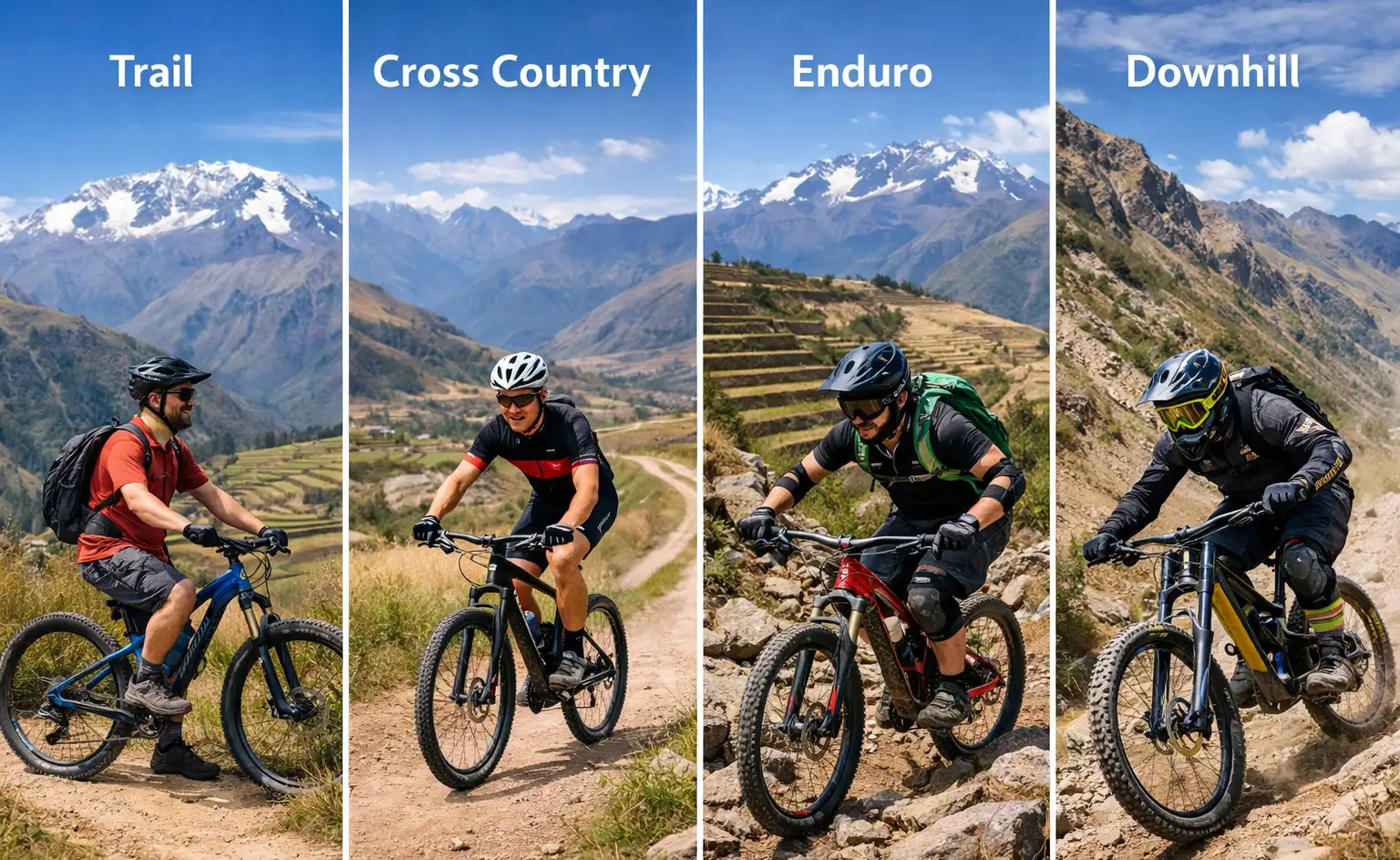
The MTB world is versatile, there’s room for both the solo cyclist and the family group. From a forest trail to the intensity of a technical descent, each modality offers a unique perspective. Trail, Cross Country, Enduro, and Downhill offer a different way to explore. However, to choose the best experience, it’s vital to understand the differences between their modalities.
Want to tackle one of the most technical trails in the Sacred Valley? Discover our day tours in Cusco designed for riders seeking real enduro in the Andes.
What are Mountain Biking Modalities?
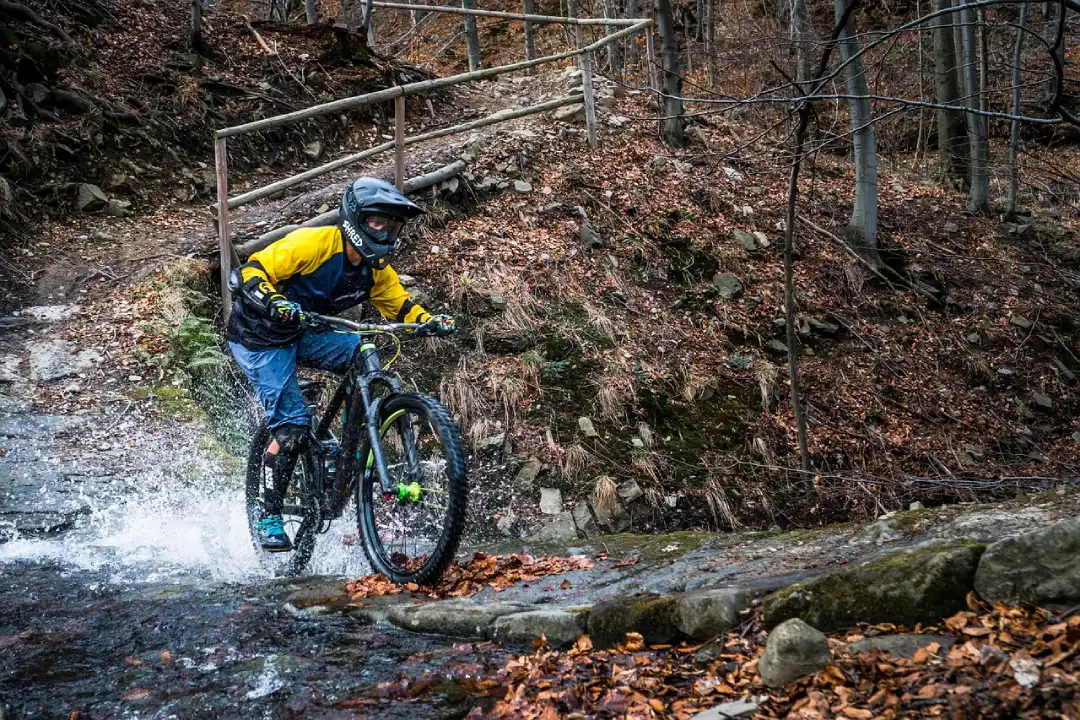
Mountain biking or mountain bike (MTB) is classified into several disciplines according to terrain type, riding style, and trail difficulty. Each modality defines how you pedal, where you pedal, and what type of experience you seek. Understanding these differences is vital for organizing your adventure, choosing the correct gear, and adjusting your budget. The most popular worldwide are: Trail, Cross Country, Enduro, and Downhill.
Variety of Mountain Biking Modalities
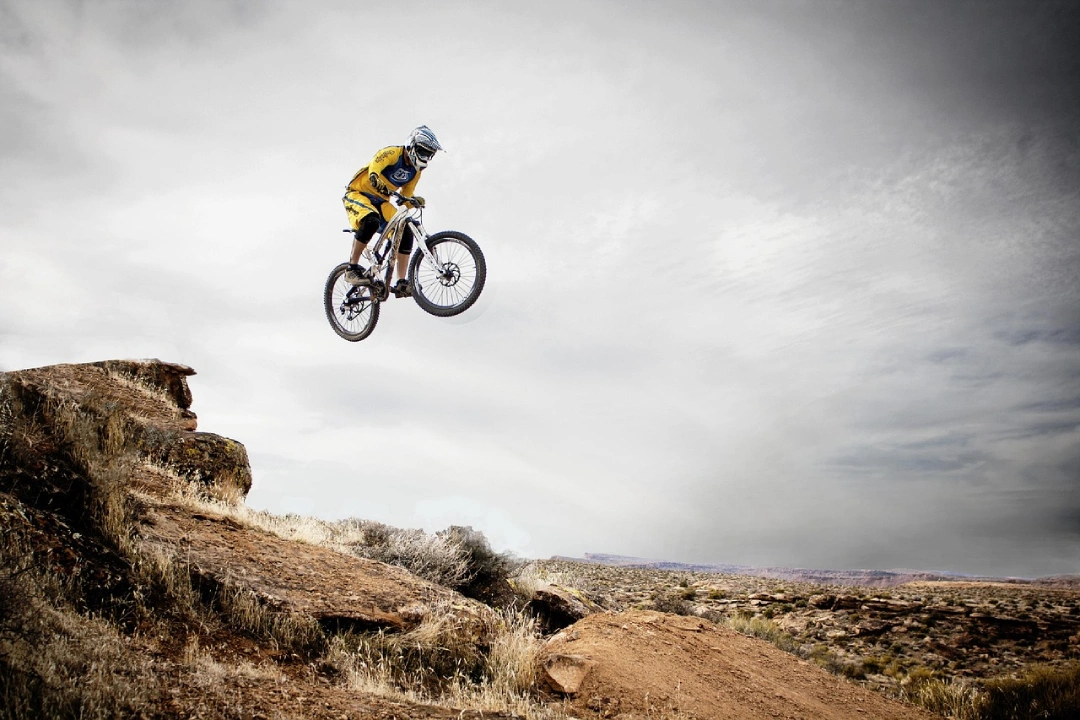
The last decade has radically transformed mountain bike design. What began as a simple hill adventure has branched into specific disciplines, defined by terrain, gradient, and required effort. According to IMBA, 8 out of 10 beginners feel lost. It’s not the same to face a steep climb with a heavy Downhill bike as to risk a big jump with a fragile Cross Country bike.
Which is perfect for you?
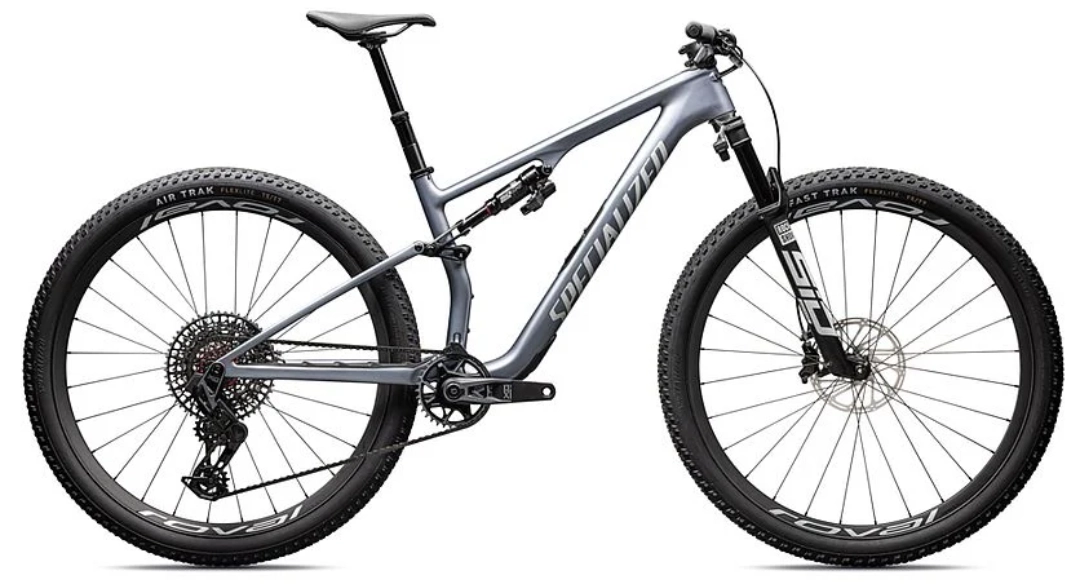
Cross Country (XC) Endurance and Speed
Cross Country is the original mountain biking discipline and remains the most accessible entry point for beginners as it’s perfect for those who enjoy prolonged effort. It’s the equivalent of the “marathon” of mountain biking.
- Who it’s for?: Cyclists who love physical effort, long distances, and want to burn calories while exploring vast landscapes.
- The Terrain: Forest trails, wide tracks, and roads with moderate technical obstacles.
- The Bike: They’re the lightest on the market. Usually have short travel front suspension 80mm to 100mm or are completely rigid.
- Features: long routes, with emphasis on physical endurance
Trail: Versatility at Its Best
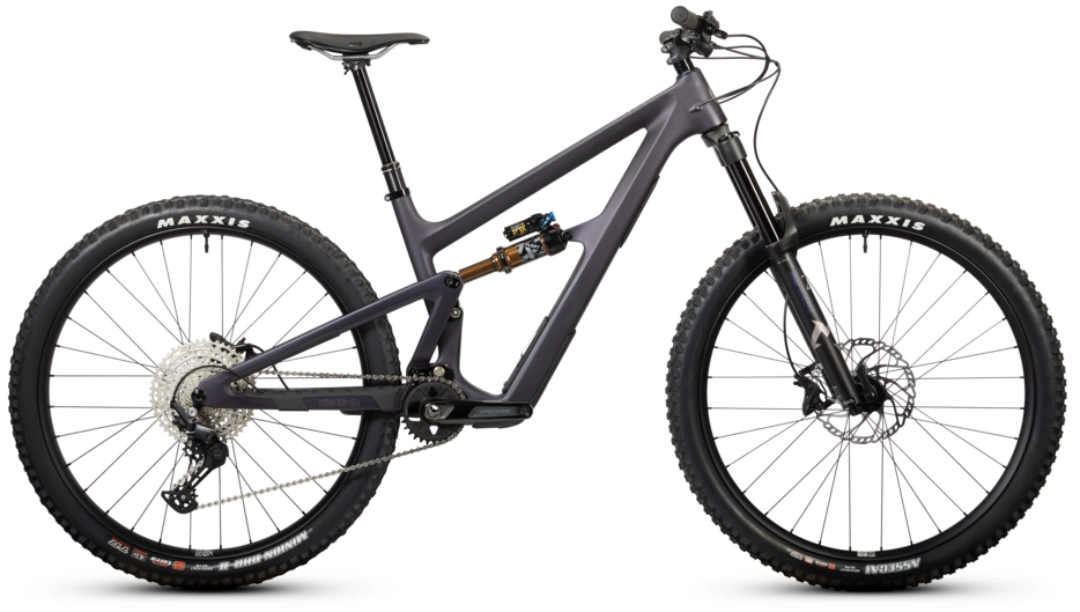
Trail is the most popular discipline in the United States because it perfectly balances climbing ability with descent fun; neither too extreme nor too tame, it doesn’t demand XC’s extreme endurance nor Downhill’s advanced technique.
- Who it’s for?: The average adventurer, families visiting national parks, and those who don’t want to limit themselves to one terrain type.
- The Terrain: A bit of everything. Rocks, roots, berms, and small jumps.
- The Bike: Almost always full suspension (front and rear) with 130 mm to 150 mm travel. They’re designed to be comfortable for hours.
- Features: mixed routes with moderate climbs and fun descents.
Enduro: Adrenaline on Descent, Legs on Climb
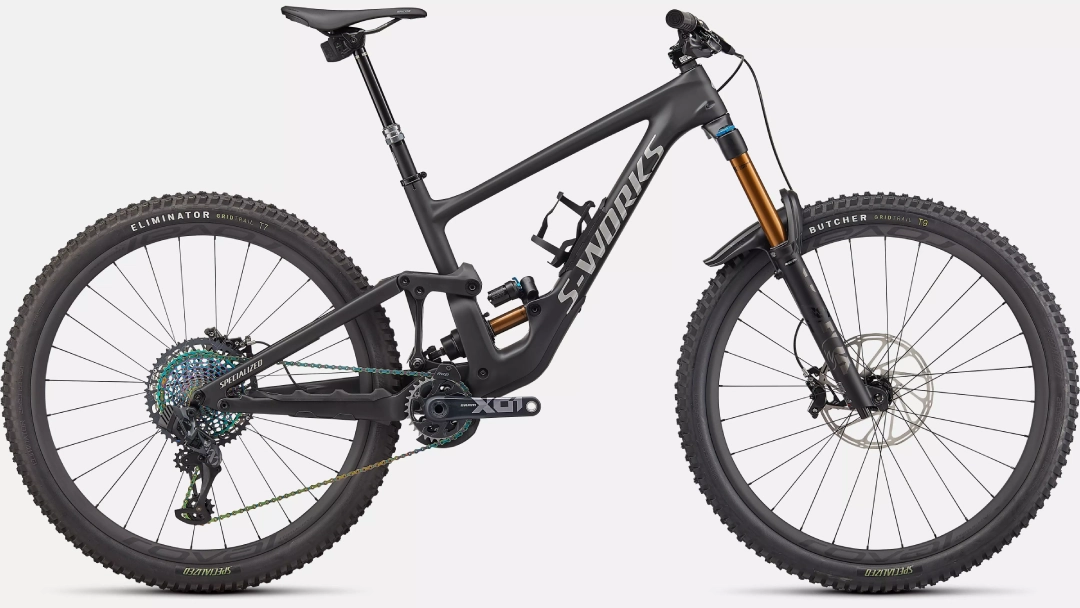
Enduro emerged from European racing and transformed into one of the fastest growing MTB modalities worldwide. It’s based on a race format where only descents are timed, but the cyclist must pedal under their own power to the top of each section.
- Who it’s for?: Thrill seekers who don’t fear physical effort but whose true reward is descending at full speed.
- The Terrain: Technical, steep, and challenging. Requires advanced handling skills.
- The Bike: Robust, with long suspensions (160mm to 180mm) and wide tires for maximum grip.
- Features: Calm climbs, timed descents.
Downhill (DH): Defying Gravity
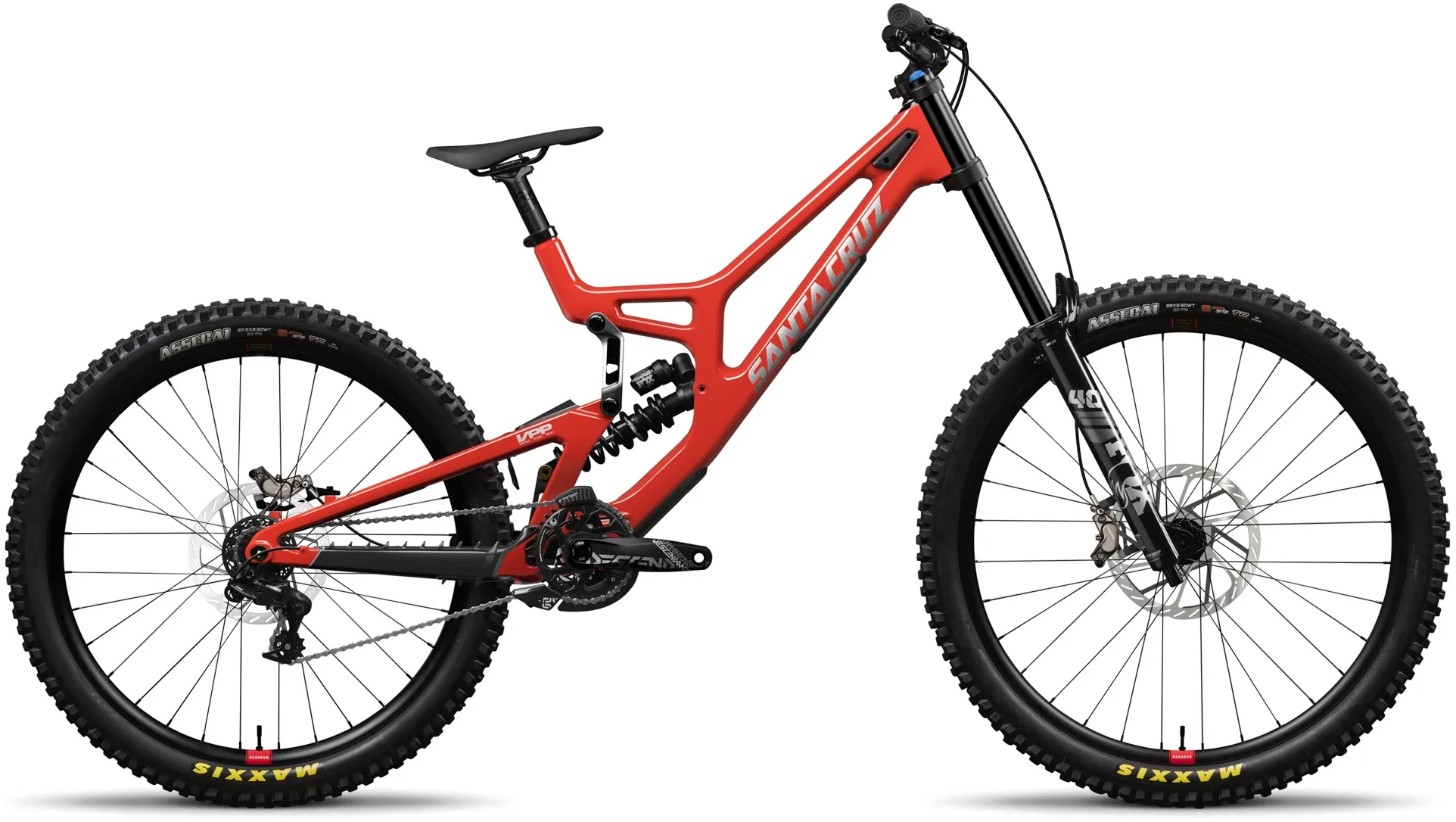
Downhill is MTB’s extreme sport. Here you don’t pedal upward but it’s pure descent, the key is speed and technique.
- Who it’s for?: Pure adrenaline addicts who prefer long descents.
- The Terrain: High difficulty tracks with massive jumps, rock gardens, and extreme slopes.
- The Bike: True engineering machines with heavy frames, oversized disc brakes, and suspensions up to 200mm.
- Features: technical descents on prepared tracks.
Common mistakes when choosing an MTB modality
- Choosing by looks, not terrain: a DH bike can feel brutal on climbs and long days.
- Overbiking too early: beginners often pick Enduro or DH before mastering braking and body position.
- Ignoring fit and setup: wrong suspension setup can make any bike feel unstable.
- Underestimating protection: Enduro and DH deserve full face + knee pads at minimum.
Thousands of travelers have trusted Peru Biking Tours to enjoy unforgettable experiences in the Andes.
Your safety comes first
Routes adapted to your level, expert local guides, and full support at every stage.
No need to worry about a thing
We take care of all the logistics so you can focus entirely on enjoying the scenery.
Authentic routes in Cusco
Experience the Sacred Valley in a real way, at your own pace, with access to the best trails.
High quality gear
High end enduro bikes, helmets, and protective gear for every level.
Plan your MTB experience in Cusco
MTB Day Tours in Cusco
If you want to explore MTB routes with the right logistics, local support, and suitable trail selection, check out our MTB Day Tours in Cusco.
E-bikes Tours
Curious how altitude impacts your e-bike in Cusco? Our E-Bike tours are designed for riders who want authentic enduro adventures in the Andes.
Frequently Asked Questions about MTB Modalities
What's the main difference between downhill and enduro in Cusco?
Downhill is only descent from high points (13,123–14,764 feet/4,000–4,500 m) with vehicle transport to the start. Enduro combines climbs you pedal yourself with technical descents. Downhill offers 1.5–3 hours of continuous descent, while enduro requires 4–6 hours of active pedaling.
Which MTB modality is best for beginners?
Trail is generally the best option for beginners. It offers a balanced bike that forgives technical errors thanks to its suspension, but remains light enough so climbs aren’t exhausting.
What's the difference between Trail and Enduro?
The main difference lies in terrain aggressiveness and suspension travel. Trail bikes are lighter and more efficient for pedaling on mixed terrain, while Enduro bikes are designed for much more technical and steep descents.
Is Downhill dangerous?
It has more risk than other modalities, but with proper gear and progression it’s manageable. With correct protective equipment (full face helmet, knee pads, elbow pads) and starting on tracks appropriate for your level, you can practice it safely.
Do I need a different bike for each modality?
Not always. Many modern Trail bikes cover various styles with proper adjustments. A good Trail bike can work for both Cross Country and less technical Enduro routes, making it versatile for those starting out.
Can I practice Cross Country in any park?
Almost always yes. Cross Country routes are usually multi use trails. However, always check local signage, as some trails are exclusive for hikers or horseback riders.
What basic gear should I bring for an MTB tour?
Besides bike and helmet, it’s essential to carry water (minimum 1.5 liters), patch kit or spare tube, multitool, energy snacks, and a phone with downloaded maps (offline), as signal is usually lost in the mountains.
Can I do Enduro without much experience?
It’s possible, but intermediate level and good physical condition are recommended to enjoy it safely. Enduro combines demanding climbs with technical descents requiring bike control and cardiovascular endurance.
Is Cross Country good for active tourism?
Yes. It’s excellent for covering long distances and experiencing landscapes in less time. XC allows you to cover more ground than walking, accessing viewpoints and remote places while exercising.
Which MTB modality is most physical?
Cross Country demands greater cardiovascular endurance. Routes are long, with continuous climbs keeping your heart rate elevated for hours, making it a complete cardiovascular workout.
Which modality burns more calories?
XC and Enduro lead by duration and accumulated effort. Cross Country can burn 600-900 calories per hour, while Enduro combines intense effort on climbs with descents that also demand energy.