
A mountain biking tour in Cusco is part of the Andean adventure and one of the most direct ways to explore the Sacred Valley trails. Along the way, you will ride on dirt tracks and community roads, with changes in elevation, weather, and terrain that affect your pace and your safety.
The best part is that you do not need to be an expert. With good planning, the experience can be adapted to different skill levels. Mountain biking in Cusco is simple when you know what a well run tour includes, what to bring, and how the route is organized. Below, you will find What to Look for in a Cusco MTB Tour in a clear, practical way.
(4 to 6 hours of riding)
(not extreme)
plus transportation
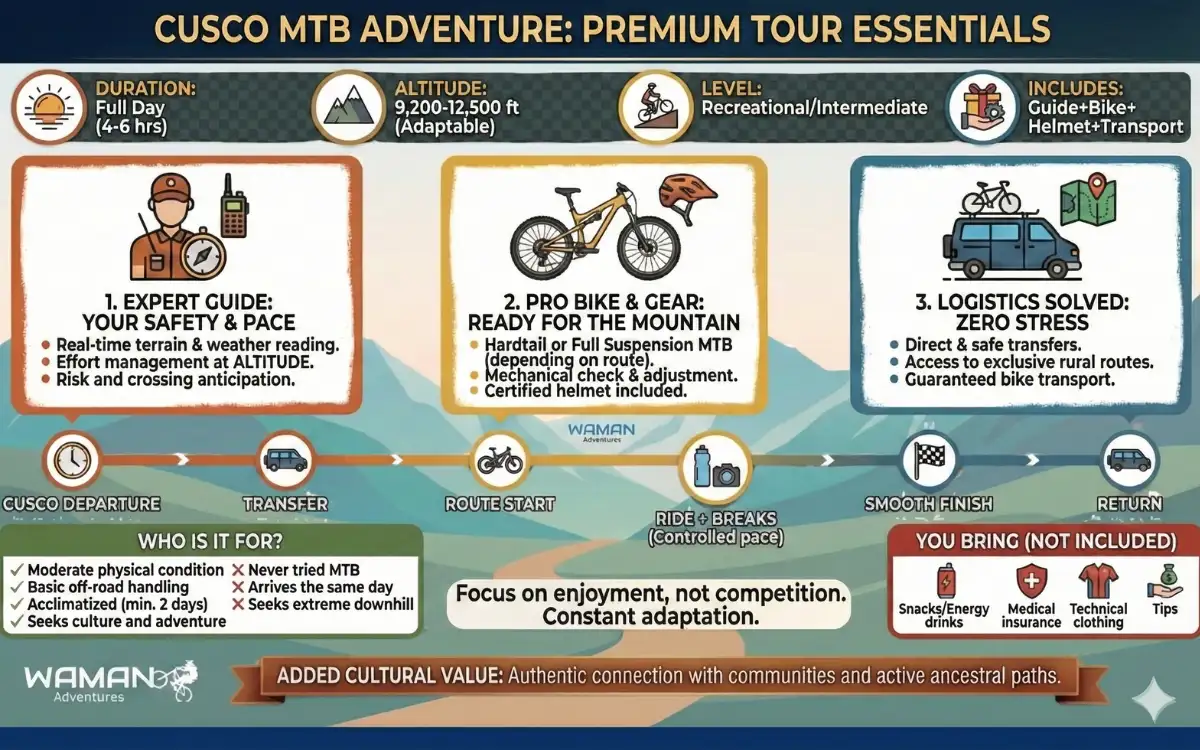
What to Look for in a Cusco MTB Tour
Your MTB Guide
A good MTB tour in Cusco always includes a specialized local guide, because here you are not just pedaling. You are riding at high altitude, on active rural roads, with weather and terrain changes that can shift the plan in minutes. That is why having someone who keeps the day safe, smooth, and matched to your level makes all the difference.
What they actually do
- Checks your fitness and riding skills before entering more demanding sections.
- Reads the terrain and the season to choose the best route for the day.
- Manages your pace at altitude so you do not burn out and you keep energy for the full ride.
During the ride
- Picks lines that fit your level and avoids overly technical tracks if you are not ready.
- Adjusts the rhythm with planned breaks and steady cadence to prevent excessive fatigue.
- Anticipates crossings and risks, including pedestrians, pack animals, dogs, local vehicles, and sudden surface changes.
Why it matters on community roads
In local communities, you are not riding a closed course. These are everyday roads. Your guide knows where to go, when to slow down, and how to ride respectfully so the experience stays safe and positive for everyone.
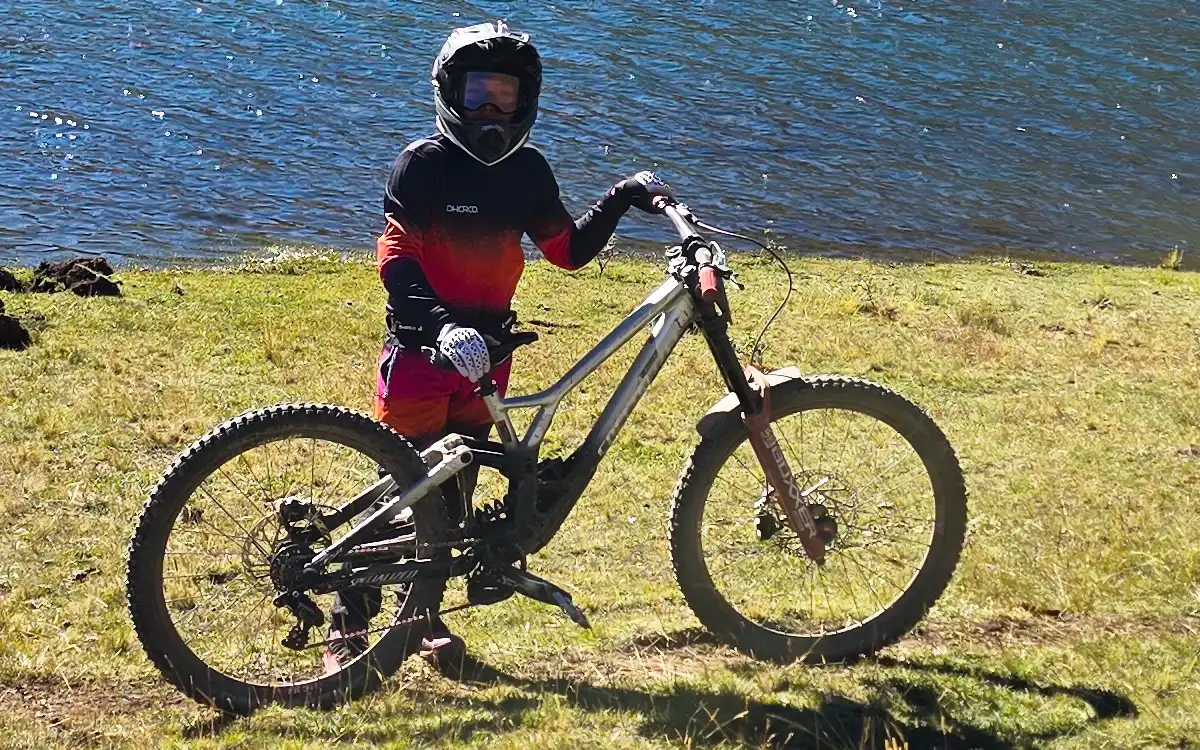
The Bike and Gear Included on an MTB Tour in Cusco
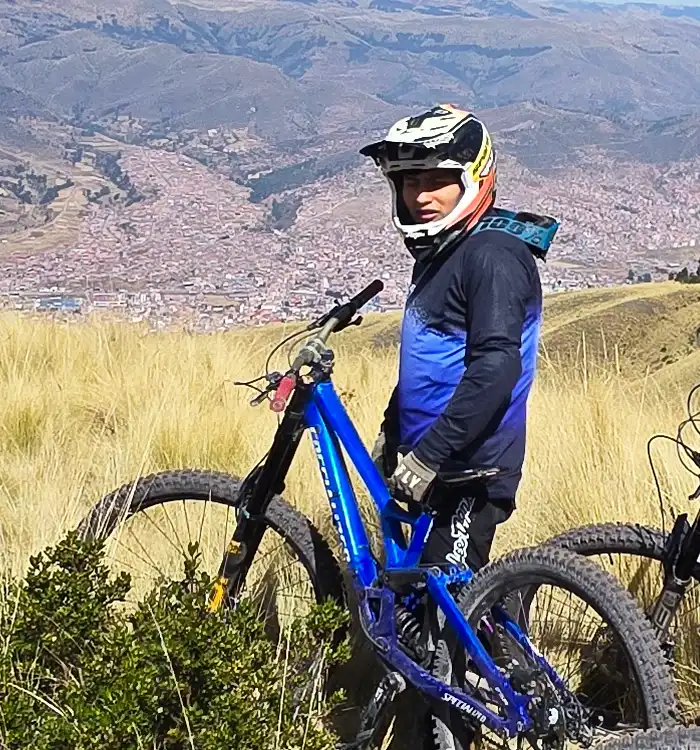
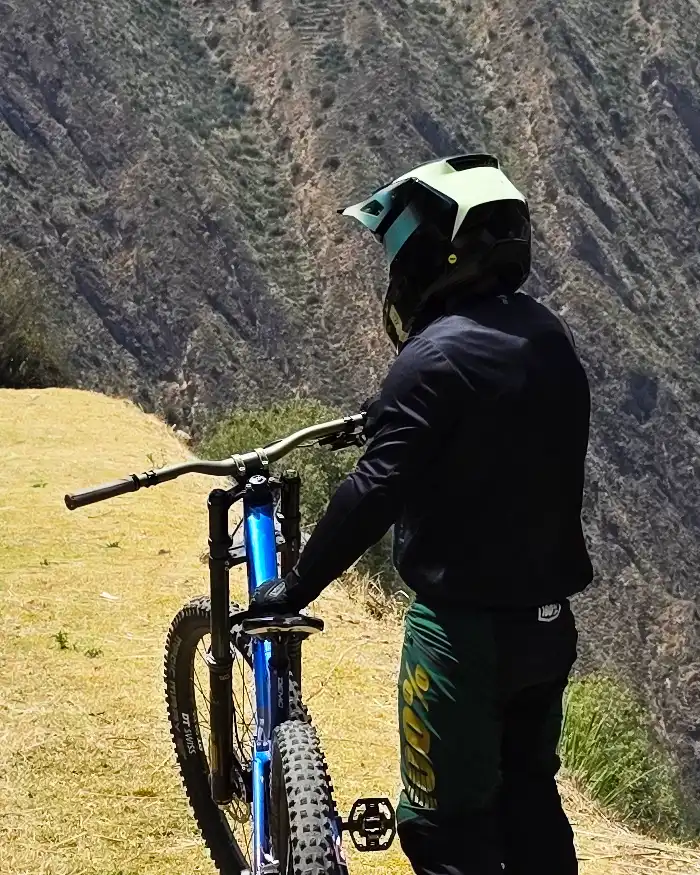
The bike and included gear are selected for Andean terrain, not for bike parks or groomed circuits. Most operators use a hardtail or a full suspension mountain bike depending on the route, elevation change, and the group’s technical level. These bikes are built to handle dirt, loose rock, rural tracks, and natural descents, helping you stay stable and in control.
Bike type you will usually get
- Hardtail: common on recreational and mixed routes. It is lighter and efficient on longer climbs.
- Full suspension: used for longer descents or rougher terrain. It adds control and comfort.
- Frames in good condition, stable mountain geometry, and a size matched to your height.
Basic setup and checks
- Basic fit adjustment (seat height, handlebar reach, and overall position).
- Brake and shifting check, essential for long descents and technical sections.
- Quick tire and pressure check, adjusted to the day’s surface (firm or loose).
Standard safety gear
- To ride safer and more comfortably, tours usually include:
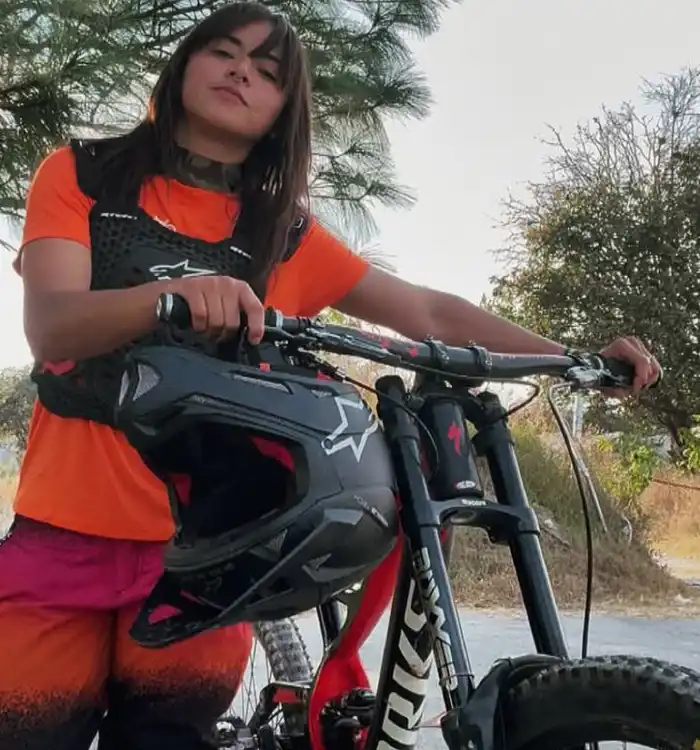
- A certified helmet, properly fitted.
- In some cases, basic gloves, especially on routes with longer descents.
Expert tip:
Adjust tire pressure to match the day’s terrain. Slightly lower pressure improves traction on rural dirt tracks.
Transportation and Logistics: How You Reach the Trails
Logistics matter because most rides do not start in the city. Many routes begin in the Sacred Valley or in rural communities several miles away, and signage is often limited. That is why going with a solid tour helps, and here is what to expect:
Pickup and departure from Cusco
- Pickup at your hotel or a prearranged meeting point.
- Drive out to the trailhead based on the plan for the day.
Transfer to the trailhead
- You arrive directly at the trailhead, without relying on public transportation.
- Your driver knows rural access roads, so you do not lose time on confusing turns.
Bike and gear transport
- Your bike is secured (on racks or inside the vehicle depending on the operator).
- Your helmet, gloves, pack, and extras stay organized and within reach.
How Routes Are Chosen Based on Your Level and Fitness
YOUR IDEAL ROUTE IN CUSCO
Support for Altitude and Physical Effort
Duration and Structure of a Typical MTB Day
The goal is to ride at a pace that makes sense for altitude, without feeling rushed. A typical day usually looks like this:
- Pickup and transfer from Cusco: you are picked up and driven to the start point (Sacred Valley or rural communities), skipping urban riding and saving energy.
- Bike setup plus short briefing: seat height, brakes, and shifting are adjusted. Your guide explains the route, terrain, signals, and etiquette when passing through towns.
- Main ride with breaks: you ride the longest section with brief stops for water, photos, and recovery, especially with climbs or wind.
- Final section (smoother or mostly downhill): you finish with a segment focused on control and awareness, since pedestrians, animals, and surface changes are common.
- Return to Cusco: you head back in the same transport, with time to change and rest.
What Is Not Typically Included on an MTB Tour in Cusco
It helps to know what is usually not included so you can plan better:
- Personal snacks and energy drinks: you manage your own fueling and hydration needs during the ride.
- Travel or medical insurance: it is recommended that you have your own policy that covers outdoor activities and adventure sports.
- Tips: these are usually not included and are up to you if you want to thank your guide and driver.
- Your personal riding clothing: shoes, specific gloves, sunglasses, or warm layers based on your comfort and experience.
Remember:
Bringing your own snacks helps you keep steady energy throughout the ride.
Who This MTB Tour in Cusco Is Designed For
This is ideal if you have moderate endurance and want to enjoy the scenery at a relaxed pace. You do not need to be an expert. It is an accessible, safe adventure designed to help you connect with Cusco while riding with full control.
Is this tour right for you?
The Cultural Value
An MTB tour in Cusco is also a cultural connection. You ride through rural communities and ancestral roads away from mass tourism, discovering local life with experienced guides.
Thousands of travelers have trusted Peru Biking Tours to live unforgettable experiences in the Andes.
Your safety first
Routes adapted to your level, expert local guides and full support at all times.
Without worrying about anything
We take care of all the logistics so you can just focus on enjoying the scenery.
Authentic routes in Cusco
Experience the Sacred Valley in a real way, at your own pace, with access to the best trails.
Quality equipment
High-end enduro bikes, helmets and protective gear for all levels.
Plan your MTB experience in Cusco
MTB Day Tours in Cusco
If you want to explore MTB routes with the right logistics, local support, and suitable trail selection, check out our MTB Day Tours in Cusco.
Multi-Day MTB Tours
For more comprehensive experiences that connect several valleys and high mountain routes, discover our multi-day MTB Tours.
Frequently Asked Questions About What a Good MTB Tour in Cusco Includes
What exactly is included in an MTB tour in Cusco?
An MTB tour in Cusco typically includes a specialized local guide, a mountain bike suited to the terrain, a helmet, round trip transportation from Cusco, and route planning based on your level and the season. The idea is that you ride safely without worrying about logistics or navigation.
Do I need to bring my own bike?
Not necessarily. Most tours include a bike, either a hardtail or a full suspension bike depending on the route. These bikes are chosen for Andean terrain, with reliable brakes and a setup that works well on rural roads. You can bring your own bike if you prefer, as long as you coordinate it in advance.
Is safety gear included?
Yes. A helmet is included as standard. Some operators also offer gloves or knee pads as an option, but the helmet is the one item that is consistently included and fitted before you start.
Is transportation from Cusco part of the tour?
Yes. Transportation is a key part of the experience and typically includes the transfer from Cusco to the starting point, bike transport, and the return at the end of the ride. This is what makes it easy to access rural communities and more remote trails without relying on public transportation.
Is altitude taken into account during the tour?
Yes. A good tour considers altitude when choosing routes, setting the pace, and deciding total duration. Your guide monitors effort, plans breaks, and can adjust the route if needed, especially if you have only been in Cusco a short time.
Is it suitable for beginners?
Yes, if you have basic fitness and can handle a bike on dirt roads. Beginner friendly tours use wider tracks, progressive elevation, and a relaxed pace. This is not an extreme experience. It is recreational MTB with real cultural value.
Does the tour include lunch or snacks?
Usually, no. Some tours may provide water, but most travelers bring their own energy snacks. Your guide will typically tell you what and how much to bring before you go.
Does the tour include cultural interaction with local communities?
Yes, in a natural way. Since you ride on community roads, you pass villages, farms, and grazing areas. Your guide often explains local life, crops, and how these roads are used, which adds real cultural depth to the ride.