
Working out at about 11,152 ft (3,399 m) above sea level changes how your body responds. This fueling for MTB in Cusco guide is designed to improve your experience and reduce early fatigue.
Wondering how to fuel properly for MTB in Cusco? Our day tours are designed for riders who want authentic enduro adventures in the Andes always smoother when you understand the key to nutrition, energy, and recovery at altitude.
The importance of fueling right at altitude
Adapting your nutrition is essential for high altitude performance. A smart food and hydration strategy helps ensure the physical energy for climbs and the mental clarity needed for technical descents, while reducing the risk of sudden exhaustion.
Remember this:
Good nutrition boosts performance, but it does not replace acclimatization. If it is your first day, ride easy, hydrate well, and rest as needed.
How altitude affects your metabolism
The first physiological shift is lower oxygen availability, which speeds up your heart rate and increases carbohydrate use even at moderate paces. Digestion can also slow down because your body prioritizes blood flow to your legs and lungs.
Then add the climate factor, where dry air and intense sun in the high Andes can accelerate dehydration before you notice it. Although losing your appetite at altitude is common, your energy needs increase, so trusting hunger cues alone is a mistake.
High altitude fueling strategies
Your nutrition plan
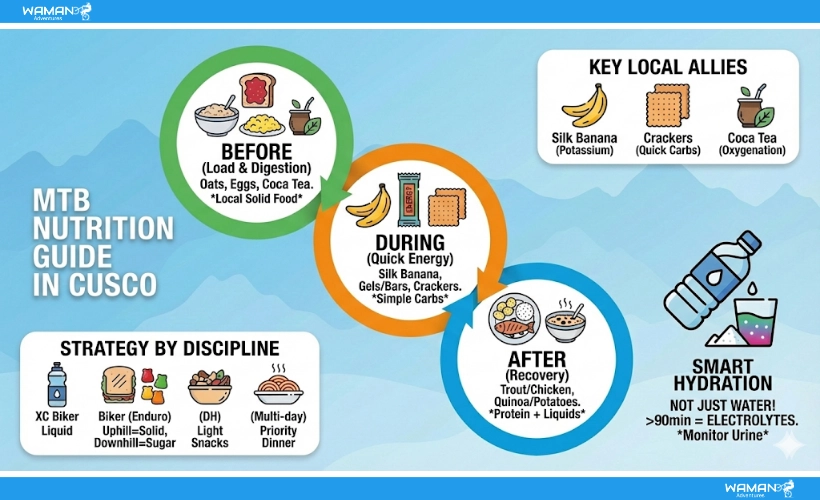
The goal is steady energy without a heavy stomach. The strategy is to eat on a fixed schedule (e.g., every hour), making sure you consume small portions. Follow this basic framework:
| Timing | Before (Pre ride) | During (On bike) | After (Recovery) |
| Goal | Top off glycogen and keep digestion light. | Fast energy that is easy to digest. | Replenish muscles and rehydrate. |
| What to eat | Oatmeal, bread with jam, scrambled eggs (cooked without oil), coca tea. | Bananas, cereal bars, gels, soda crackers. | Trout, chicken, rice, potatoes, quinoa soup. |
Easy to find local options
You do not need to bring imported supplements. Cusco’s corner stores and markets have effective options:
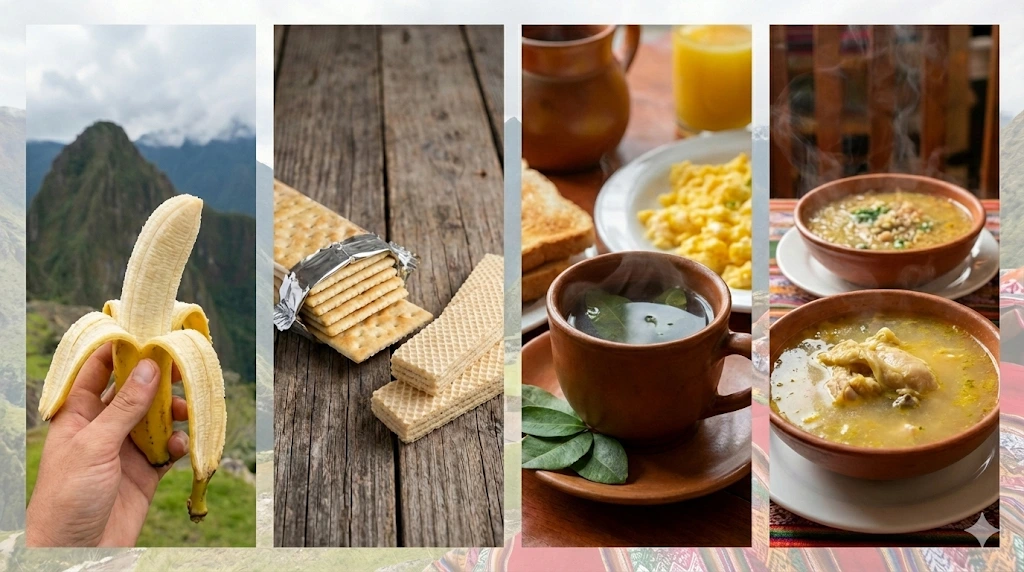
- Banana: A local banana variety rich in potassium and easy to digest.
- Soda crackers or vanilla cookies: Simple carbs, ideal if you do not like gels.
- Coca tea: Traditionally used in the Andes, but clinical evidence is inconclusive and it does not replace acclimatization. If you drink it, have it at breakfast and always pair it with food.
- Local soups: Quinoa soup or light chicken soup are excellent after your ride because they provide fluids and salt at the same time.
Strategy by your discipline
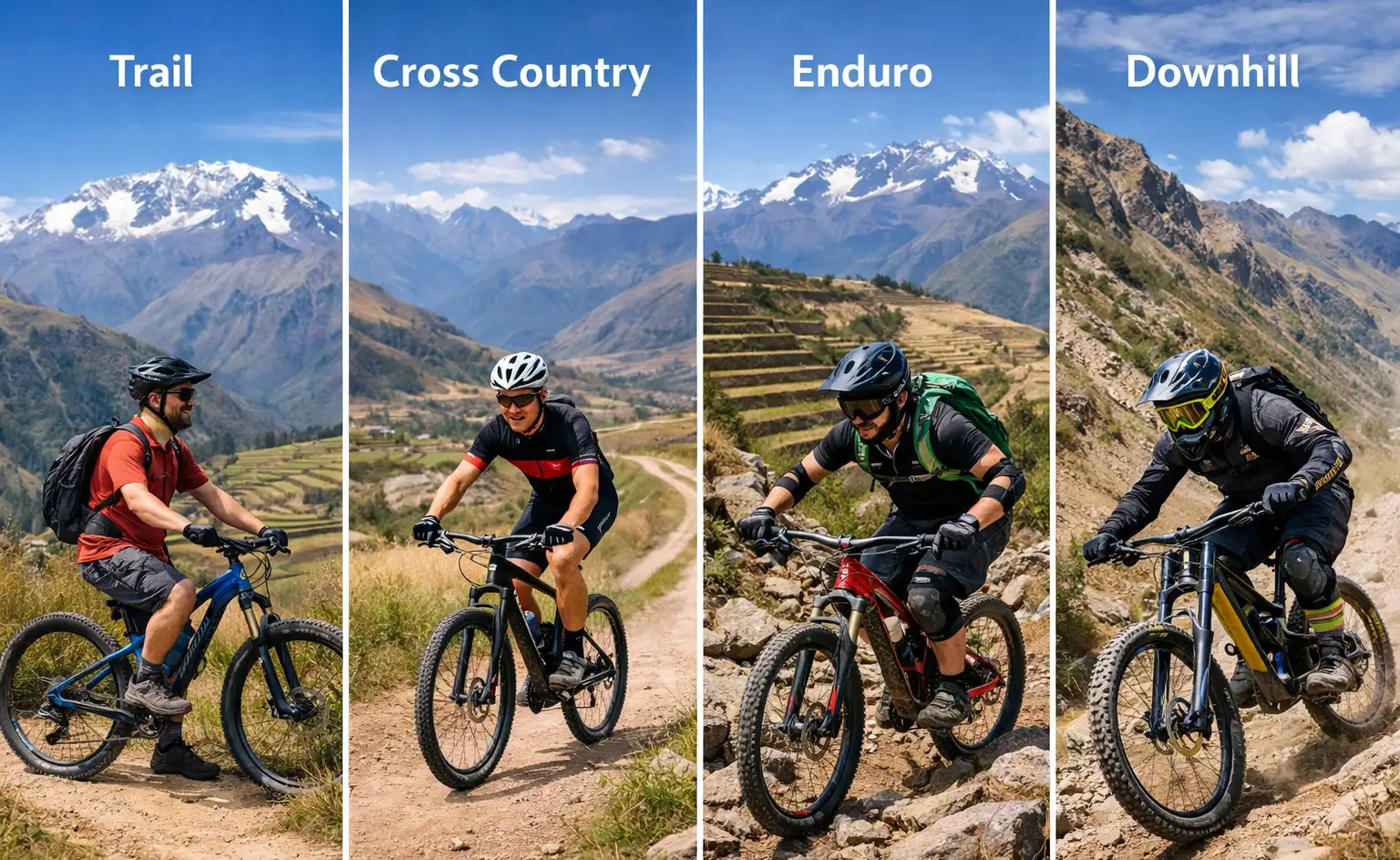
- XC and Trail: Prioritize liquid calories or purees. If you eat solids, keep them to small bites.
- Enduro: Eat solids (bars, a sandwich) only on the climbs. Before dropping in, use fast sugar (gummies) to keep your reflexes sharp without feeling heavy.
- Downhill: Light snacks (chocolate, dried fruit) to maintain mental focus between runs.
- Multi day: Your recovery depends on a carb rich dinner (pasta, rice) so you wake up with energy for the next day.
Hydration and electrolytes
On long rides, plain water is not enough to replace lost minerals and sodium, increasing the risk of cramps.
If the ride lasts more than 90 minutes, add salts or electrolytes to a bottle. Use your urine color as a guide; dark, low volume urine means you need to rehydrate right away.
Common mistakes to avoid
Riding on an empty stomach
Tough at altitude; your energy stores burn fast.
Fats before riding
Fried foods take time to digest and can cause stomach issues.
Alcohol beforehand
It severely dehydrates you and can derail acclimatization.
Thousands of travelers have trusted Peru Biking Tours to enjoy unforgettable experiences in the Andes.
Your safety comes first
Routes adapted to your level, expert local guides, and full support at every stage.
No need to worry about a thing
We take care of all the logistics so you can focus entirely on enjoying the scenery.
Authentic routes in Cusco
Experience the Sacred Valley in a real way, at your own pace, with access to the best trails.
High quality gear
High end enduro bikes, helmets, and protective gear for every level.
Plan your MTB experience in Cusco
MTB Day Tours in Cusco
If you want to explore MTB routes with the right logistics, local support, and suitable trail selection, check out our MTB Day Tours in Cusco.
E-bikes Tours
Curious how altitude impacts your e-bike in Cusco? Our E-Bike tours are designed for riders who want authentic enduro adventures in the Andes.
Frequently Asked Questions
Why do I tire out faster in Cusco?
The lack of oxygen makes your heart work harder, and you burn through glucose faster. To avoid this, eat a light breakfast and take small bites during the ride before you feel hungry.
What should I eat before heading out?
Easy to digest carbs like oatmeal, bread with jam, and eggs cooked without oil. Avoid heavy fried foods that take longer to digest and can cause stomach trouble.
What snacks should I bring if I don't use gels?
Plátano de seda (silk banana), soda crackers, and cereal bars. Eat small bites frequently to maintain energy without overfilling your stomach.
How does food differ between XC, Enduro, and Downhill?
XC: Liquids and semi liquid options. Enduro: Solids on climbs, fast sugar before descents. Downhill: Light snacks for mental focus.
Do I need electrolytes?
Yes. The dry air can dehydrate you quickly. If you ride for more than 90 minutes, use electrolytes to replenish salts and help prevent cramps.
What should I eat after the ride?
Combine carbs (rice or potatoes) with protein (trout or chicken). Quinoa soups are excellent for rehydrating and replenishing salts.
What if I lose my appetite?
Do not wait for hunger. Fuel on a schedule (every 45 min) with small bites of simple foods to avoid energy dips.
Common nutrition mistakes?
Riding on an empty stomach, eating heavy fats before riding, and drinking alcohol the night before. All three increase fatigue and dehydration.