
The duration of enduro descents in the Sacred Valley varies depending on the route, terrain, altitude, weather, and even your own pace in the mountains. In this guide, you will get a clearer sense of how long each experience can really take and which factors can make the same route feel completely different from one day to the next.
Want to ride one of the most technical descents in the Sacred Valley? Explore our Day Tours in Cusco designed for riders looking for real enduro in the Andes.
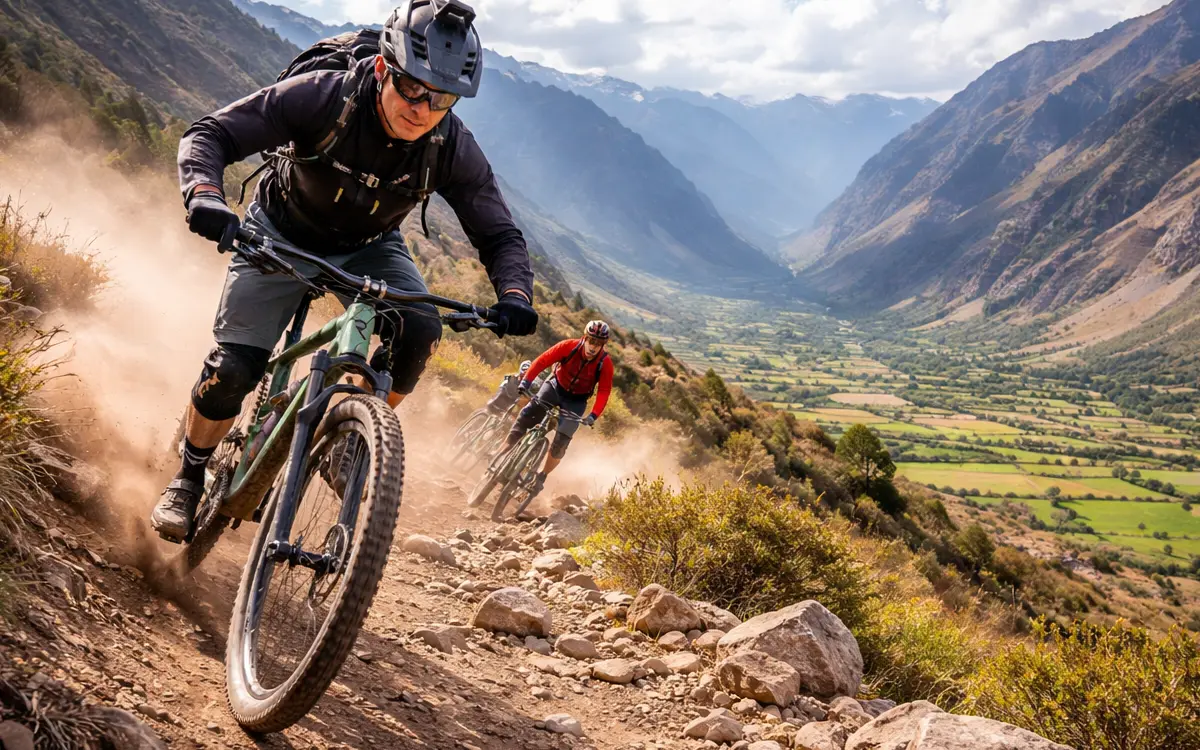
How long an enduro descent in the Sacred Valley lasts depending on the route
Unlike other destinations, time here does not depend only on distance, but also on the combination of altitude, technique, and descending pace.
Long descents (Patacancha)
Estimated duration: between 1.5 and 3 hours
Characteristics:
- Major vertical drop, with more than 3,281 feet (1,000 m) of descent.
- Starting point in the high mountains, around 13,123 feet (4,000 m) or higher.
- Constant terrain changes.
Intermediate descents (Urquillos, Lamay)
Estimated duration: between 40 minutes and 1.5 hours
Characteristics:
- Better continuity.
- Less exposure than on higher routes.
- Moderate technical difficulty, with flowing sections.
Short descents (Pumamarca)
Estimated duration: between 20 and 45 minutes
Characteristics:
- Shorter duration, but high intensity.
- Technical terrain from the very beginning.
- Less transition between sections.
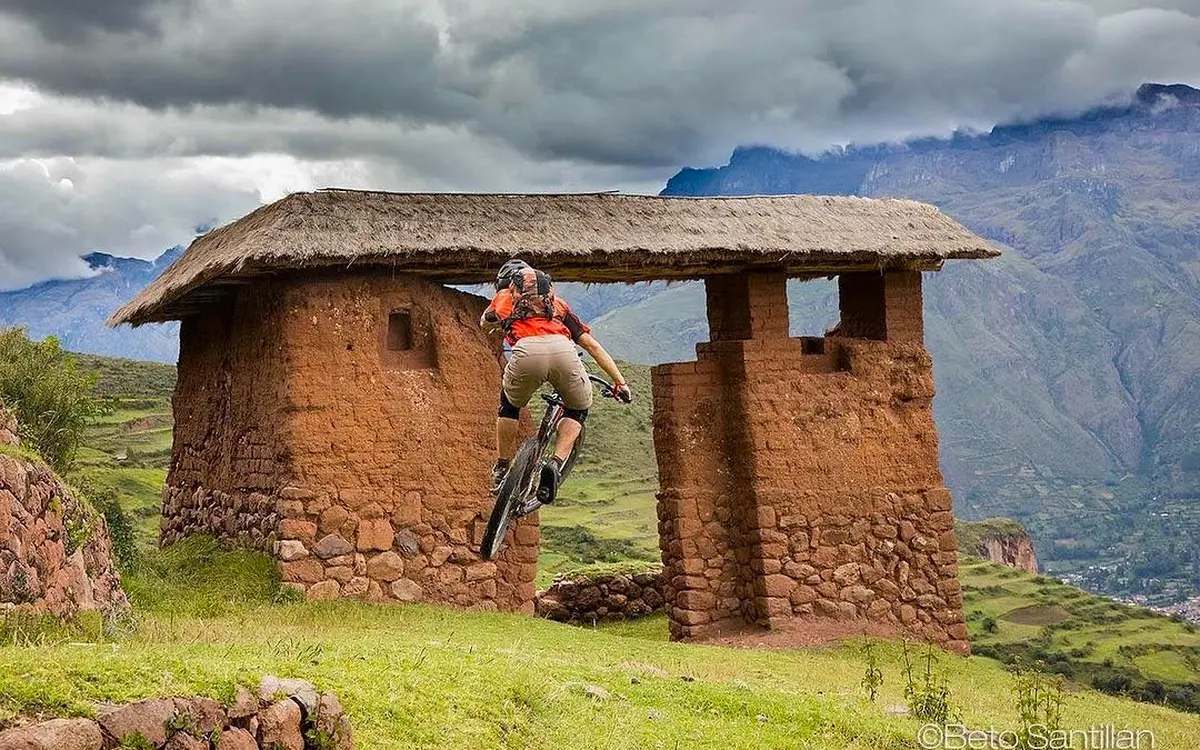
Keep in mind:
Taking strategic breaks can improve your overall performance.
What factors change the duration of enduro descents in the Sacred Valley
The duration of enduro descents in the Sacred Valley can vary depending on the route, but other factors also play a role, including weather, terrain, and your skill level on the bike.
Terrain changes your pace
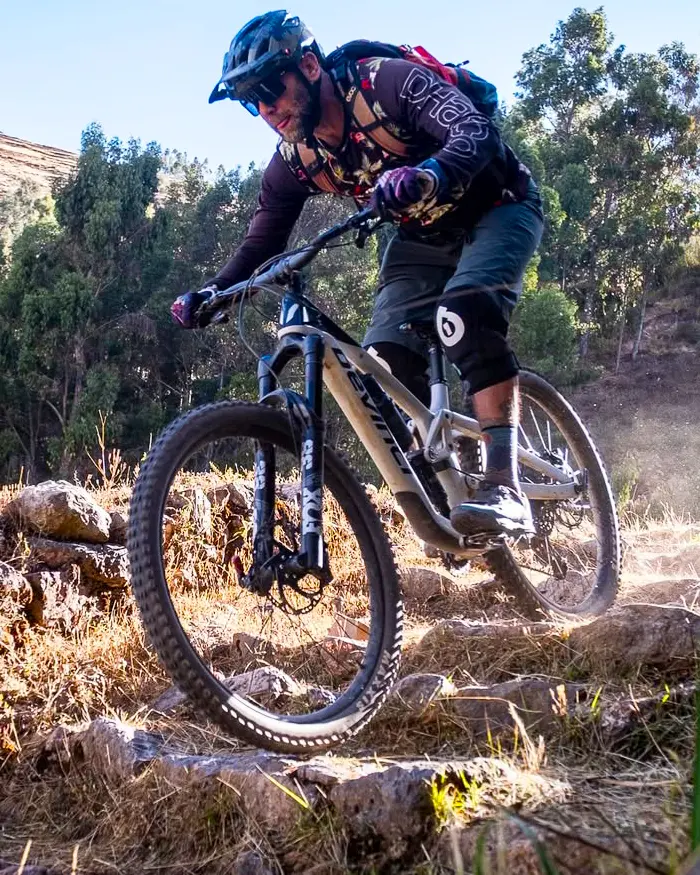
This is one of the factors that influences duration the most, because on a single descent you may encounter loose rock, tight turns, technical sections, narrow trails, or more flowing stretches. When the terrain becomes more uneven, you usually slow down, which makes the route feel less fluid.
The rider’s level
A more experienced rider usually maintains better flow and can handle technical sections more quickly. On the other hand, if you have less experience, it is normal to take more breaks and need more time to complete the route.
The weather
Conditions on the day also affect the time quite a bit. In dry conditions, the terrain usually feels firmer and more predictable. With mud, moisture, or wet rock, traction drops and braking distances get longer.
Altitude
Many Sacred Valley routes start high up, and that can make you fatigue earlier, even on long descents. At that elevation, your body gets tired faster, recovers more slowly, and may need extra breaks, which also increases the total descent time.
How long enduro descents take depending on the season
Did you know…?
Changes in terrain force you to adjust your pace constantly, affecting the actual duration.
How many descents you can do in a day in the Sacred Valley
The number of descents you can do in a day in the Sacred Valley depends mainly on three things: the type of route, shuttle time, and your energy level. Since this is not a bike park, every run requires more logistics and planning.
What is most common on a riding day
- 1 long descent, such as a Patacancha style route.
- 2 to 3 intermediate or short descents, such as Urquillos, Lamay, or Pumamarca.
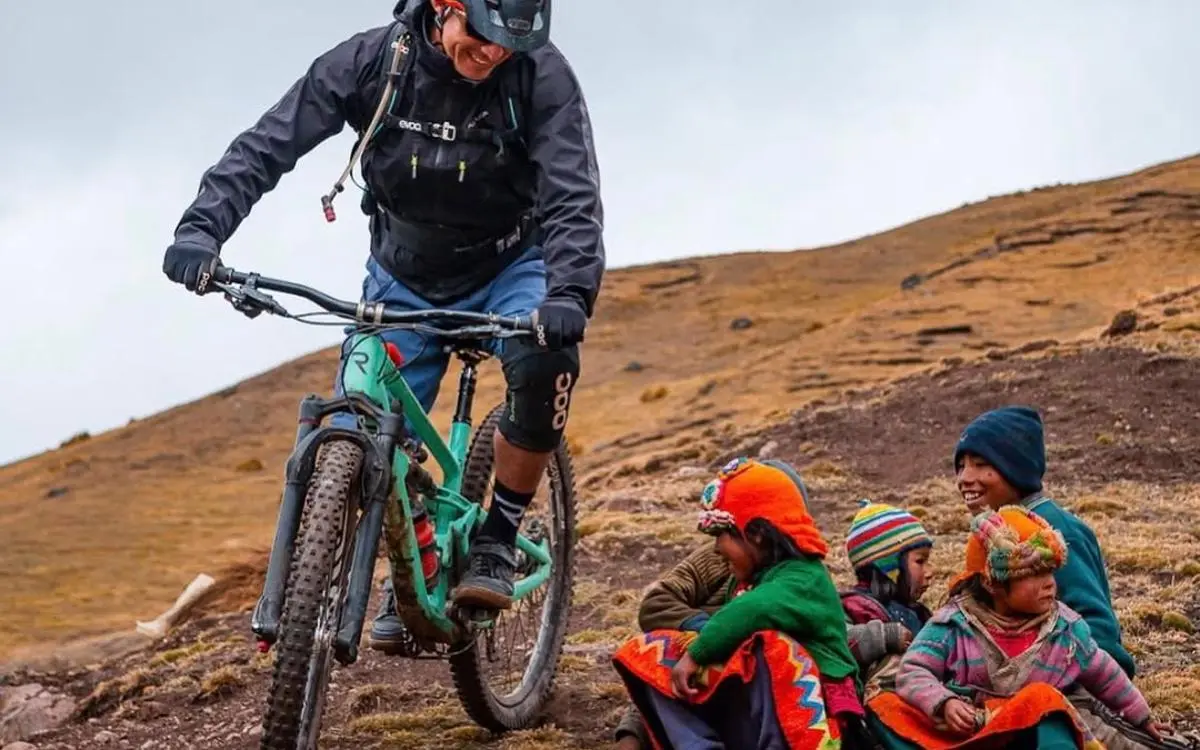
How to plan your day based on duration
Planning your day well in the Sacred Valley is key to making the most of your time without overloading the experience. Here, the duration of enduro descents in the Sacred Valley depends not only on the descent itself, but also on transportation, altitude, and your energy level.
Define the type of ride
- One long descent: takes up almost the entire day, like Patacancha.
- Several short or intermediate descents: allow you to have more variety in a single day.
Adjust to the time you have available
- Half day: suitable for a short route or one specific descent.
- Full day: necessary for long routes or for combining 2 to 3 descents.
What long descents really feel like
-
-
- Progressive fatigue in your arms and hands.
- A constant need for concentration.
- Continuous pace changes throughout the descent.
- Greater demand when reading the terrain.
- The impact of altitude on your breathing.
- Accumulated physical wear in your legs and body.
- Mental fatigue from constant decision making.
- Less margin for error as time passes.
- The feeling of a long, complete ride in real mountain terrain.
- Greater satisfaction at the end because of the level of effort and control it demands.
-
Thousands of travelers have trusted Peru Biking Tours to enjoy unforgettable experiences in the Andes.
Your safety comes first
Routes adapted to your level, expert local guides, and full support at every stage.
No need to worry about a thing
We take care of all the logistics so you can focus entirely on enjoying the scenery.
Authentic routes in Cusco
Experience the Sacred Valley in a real way, at your own pace, with access to the best trails.
High quality gear
High end enduro bikes, helmets, and protective gear for every level.
Plan your MTB experience in Cusco
MTB Day Tours in Cusco
If you want to ride routes like Lamay Sapacto with the right logistics, local support, and the right trail selection, check out our MTB Day Tours in Cusco.
Multi Day MTB Tours
For more complete experiences that connect multiple valleys and high mountain routes, discover our Multi Day MTB Tours.
Frequently asked questions about the duration of enduro descents in the Sacred Valley
What is the average duration of enduro descents in the Sacred Valley?
The duration of enduro descents in the Sacred Valley usually ranges from 30 minutes to 3 hours of actual descending time, depending on the route. The shorter ones can feel intense and direct, while the longer ones feel like a more complete and progressive experience.
Does the duration change depending on the route?
Yes. In the Sacred Valley, there are short, intermediate, and long routes, and each one has very different timing. Length, vertical drop, and terrain type all make the duration of enduro descents in the Sacred Valley vary quite a bit from one run to another.
Does altitude affect descent duration?
Yes. Many routes begin between 11,500 and 14,764 feet (3,500 and 4,500 m), where there is less oxygen. That can make you fatigue faster, need more breaks, and change the duration of enduro descents in the Sacred Valley, leading you to descend at a more conservative pace.
Does it take longer during the rainy season?
Yes. In the rainy season, the terrain usually becomes more slippery and more technical because of mud, wet rock, and lower traction. That usually makes the duration of enduro descents in the Sacred Valley longer.
How many descents can you do in a day?
Most often, you can do between 1 and 3 descents per day, depending on the route, logistics, shuttle time, and your energy level. In the Sacred Valley, each run requires more planning than in a bike park.
Does the duration include transportation?
Not always. Descent time is different from the total time of the experience. In addition to the descent, you also need to consider the shuttle, breaks, and the overall organization of the day.
Is it better to do one long descent or several shorter ones?
It depends on your level and the kind of experience you are looking for. One long descent feels more complete and progressive, while several shorter ones give you more variety and a more dynamic day.
Does the rider’s level change the duration of the descent?
Yes. A more experienced rider usually maintains better flow, brakes less, and handles technical sections more quickly. That is why the same route can take much more or much less time depending on who rides it.