
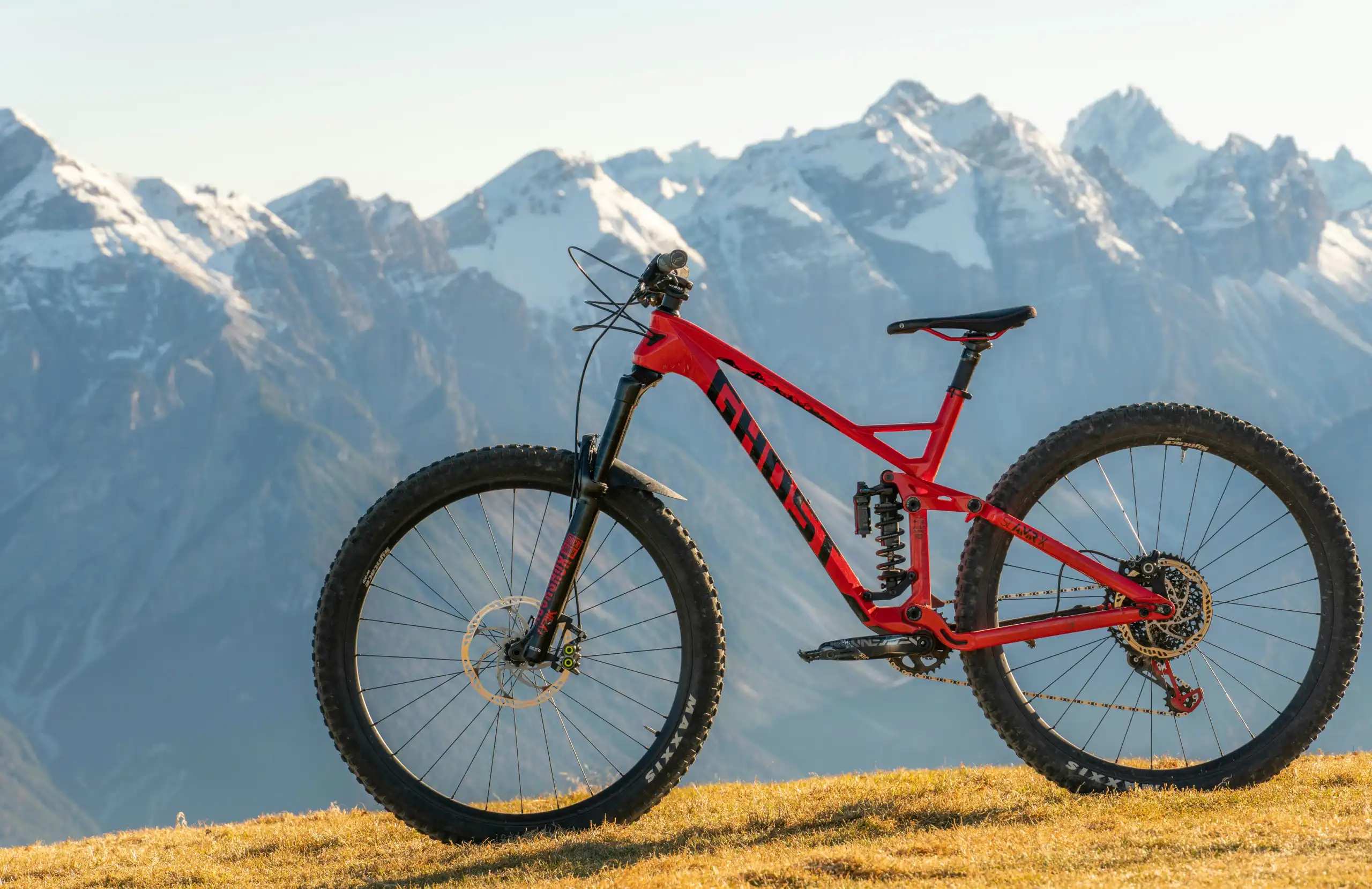
Planning a mountain biking trip to Peru brings a key dilemma: Rent or Bring Your Own Bike to Cusco? There’s no single answer, as it depends on your budget, trip duration, route types, and experience level. This guide analyzes the pros and cons; practical tips so you make the best decision according to your profile and enjoy to the fullest.
Want to tackle one of the most technical trails in the Sacred Valley? Discover our day tours in Cusco designed for riders seeking real enduro in the Andes.
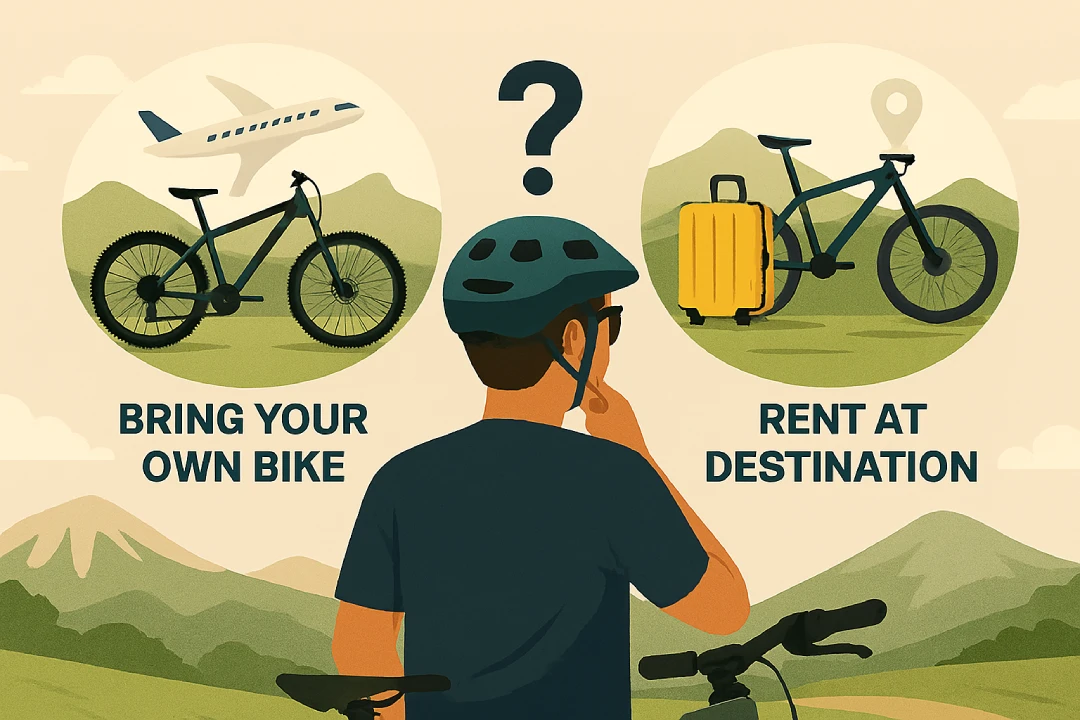
Between performance and practicality: Rent or Bring Your Own Bike to Cusco?
Bringing your own bike guarantees the geometry, suspension setup, and contact points (seat and grips) are perfect. However, Peru presents unique challenges: airports with tight connections, transfers in pickup trucks over dirt roads, and altitude that affects your tire and suspension pressure.
On the other hand, Peru’s adventure tourism industry has taken a giant leap. By 2026, major operators in Cusco and Lima have renewed fleets from brands like Specialized, Santa Cruz, and Trek, equipped specifically for the Andes’ aggressive terrain.
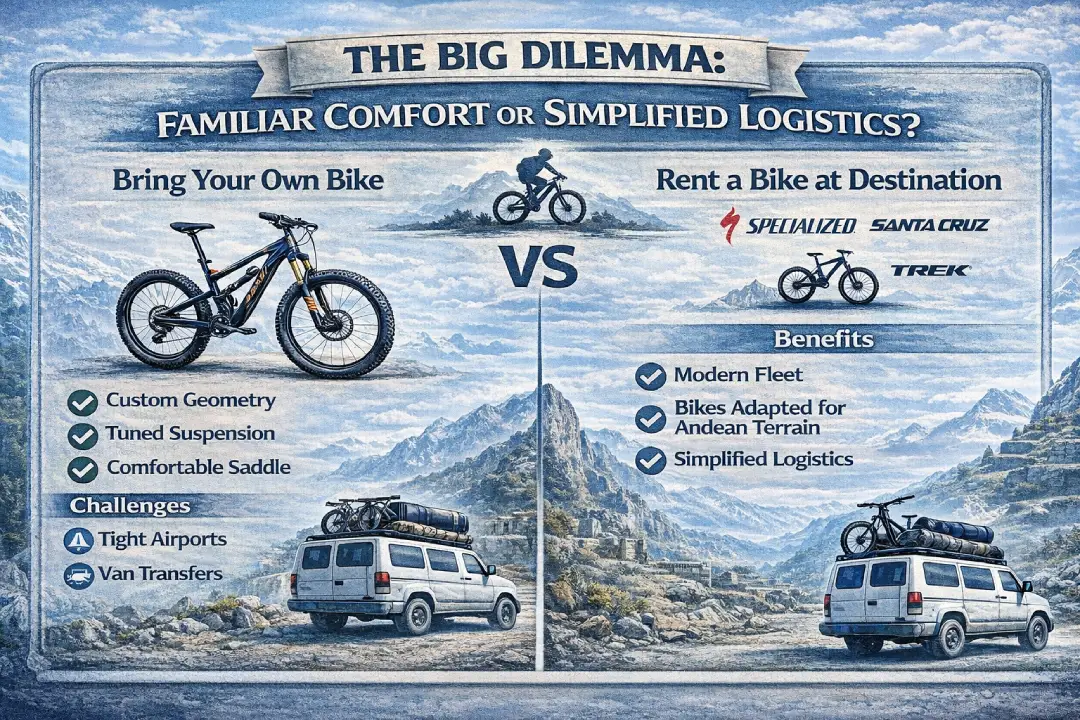
Bringing your own bike: Pros and Cons
Bringing your “trusty companion” is a statement of intent, but it has a price beyond dollars as it involves much more than simply packing and paying a fee. Here are the advantages and disadvantages of bringing your own bike.
Advantages:
- Ergonomic Fit: On technical routes like Inca Avalanche, having your own brakes and measurements is a critical safety advantage.
- Long Term Cost: If staying more than 10 days, air transport cost is amortized compared to daily rental.
- If coming for competition or long stay, bringing your own bike makes sense.
Disadvantages:
- Airline Fees: US airlines typically charge between $150 and $300 USD per leg for sports equipment.
- Damage Risk: Internal transfers in Peru sometimes involve loading bikes on roof racks; risk of scratches or impacts is real.
- Customs: Although Peru is tourist friendly, the process for entering expensive sports items sometimes requires additional paperwork if bringing more than one unit.
Biker Comment:
“First time I flew to Peru with my bike, total cost was $615 including new bag. But on my third trip, real cost was only $315 (airfare + insurance) the bag was already paid for and the packing/unpacking process was a 30 minute routine.
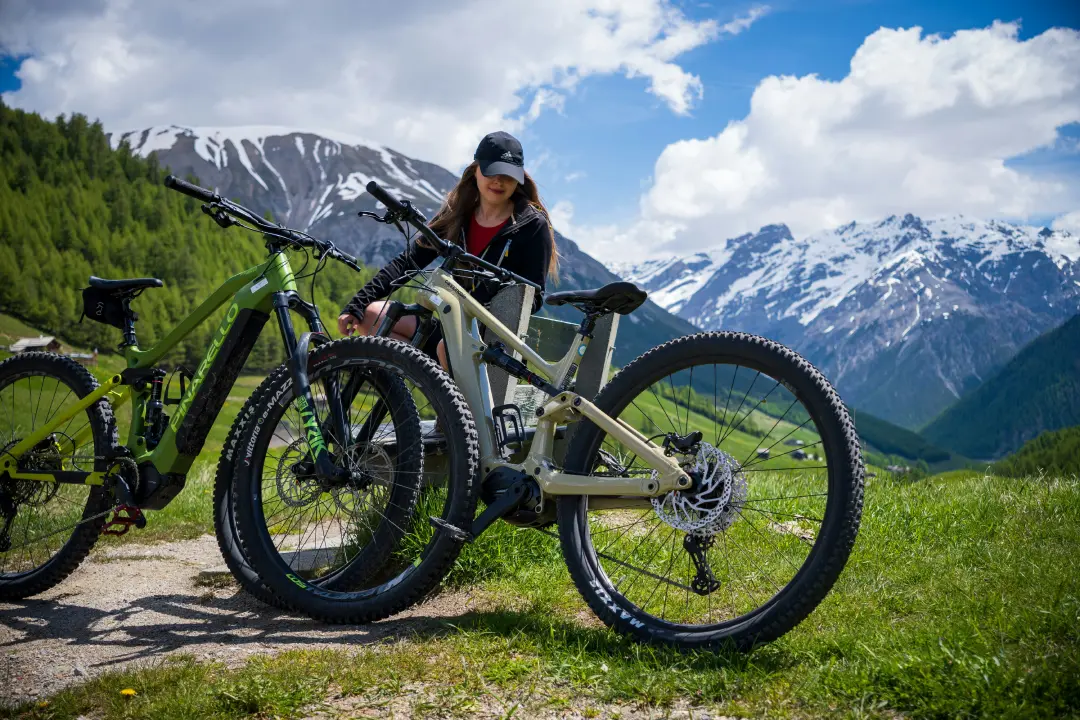
When bringing your own bike makes more sense:
- Trips over 10 days where maximizing bike time justifies initial investment
- Experienced riders with specific bike setup (custom geometry, unique components)
- Advanced mountain biking trips (Enduro, technical Downhill) where bike quality is critical
- If already own bike travel case from previous trips (amortize investment)
- Groups of 3-4 cyclists who can share ground transport costs for cases.
Renting bike in Peru: Pros and Cons
Rental is the preferred option for those seeking versatility and wanting to combine cycling with other trip aspects. However rental bike quality in Peru varies dramatically. Understanding what to expect and where to look is fundamental.
Advantages:
- E-MTB Technology: At Peru Biking Tours you can rent a high end electric bike, something nearly impossible (and very expensive) to fly due to lithium battery restrictions.
- Maintenance Included: Peruvian terrain is dusty and abrasive. If renting, you don’t worry about cleaning the drivetrain or bleeding brakes at day’s end.
- Specificity: You can rent an Enduro bike for Sacred Valley and a Downhill bike for Lima parks.
Disadvantages:
- Size Availability: If very tall (XL) or very short (XS), book months in advance.
- Components: You might not like the tires or brake pad compound chosen by the local shop.
- Most basic rental shops in Cusco you see walking tourist streets offer mediocre or frankly bad bikes.
Biker Comment:
“The $25/day bike I rented in central Cusco technically worked, but brakes squealed constantly, rear derailleur skipped on every climb, and fork felt rigid. Wouldn’t recommend it for anything more technical than paved roads.”
When renting makes more sense:
- Short trips of 3-7 days where bike flight costs aren’t justified
- First time doing MTB in Peru, test terrain before committing to longer future trips
- Intermediate cyclists on standard bikes (not super customized setup)
- Those prioritizing logistical simplicity over gear familiarity E-Bike (only viable option)
Thousands of travelers have trusted Peru Biking Tours to enjoy unforgettable experiences in the Andes.
Your safety comes first
Routes adapted to your level, expert local guides, and full support at every stage.
No need to worry about a thing
We take care of all the logistics so you can focus entirely on enjoying the scenery.
Authentic routes in Cusco
Experience the Sacred Valley in a real way, at your own pace, with access to the best trails.
High quality gear
High end enduro bikes, helmets, and protective gear for every level.
Plan your MTB experience in Cusco
MTB Day Tours in Cusco
If you want to ride routes like Lamay Sapacto with the right logistics, local support, and the right trail selection, check out our MTB Day Tours in Cusco.
Multi Day MTB Tours
For more complete experiences that connect multiple valleys and high mountain routes, discover our Multi Day MTB Tours.
Frequently Asked Questions – Rent or Bring Your Own Bike
Which option is better for beginners?
Renting in Peru is usually better, because it avoids logistics, reduces transport risks, and gives you a modern bike ready to use, adjusted to Cusco’s terrain.
Can I bring my electric bike battery on the plane?
Generally no. Commercial flight rules allow lithium batteries up to 100 Wh and, with airline approval, some 101–160 Wh. But E-bike batteries normally exceed 160 Wh, so the most viable option in Peru is renting a local E-bike.
How much does daily rental of a high end MTB cost in Peru?
The average is typically between $80 and $120 USD per day for a high end full suspension (often carbon frame). If choosing an E-MTB, price can rise to $130–$150 USD per day, depending on model and included services.
What bike brands can I rent in Cusco?
In 2026, several operators offer high end models like Specialized Turbo Levo (E-bike), Santa Cruz Nomad, and Trek Slash. Most fleets focus on Enduro and All Mountain, because Cusco’s terrain is typically technical, with loose rock, natural steps, and long descents.
Is it safe to rent bikes in Cusco?
Yes, but always check brakes, suspension, and general condition before leaving. Ask them to adjust bike to your size and do a short test to confirm everything works well.
Should I bring my own helmet to Peru?
Definitely yes. For hygiene and personal safety, bringing your own helmet (and if possible, a full face one) is best. Although shops rent helmets, nothing fits better than yours.
What pedals do rental bikes come with?
Most come with basic platform pedals (flats). If using clip system (SPD), it’s highly recommended you bring your own pedals and pedal wrench to install them quickly at the rental shop.
Do I need to bring tools if renting a bike in Peru?
Not necessarily if renting from a premium operator including basic tools and mechanical support. Still, it’s recommended to bring: personal multitool, small pump, patches or spare tubes, and if doing very remote routes, a chain spare or quick link.